
 English
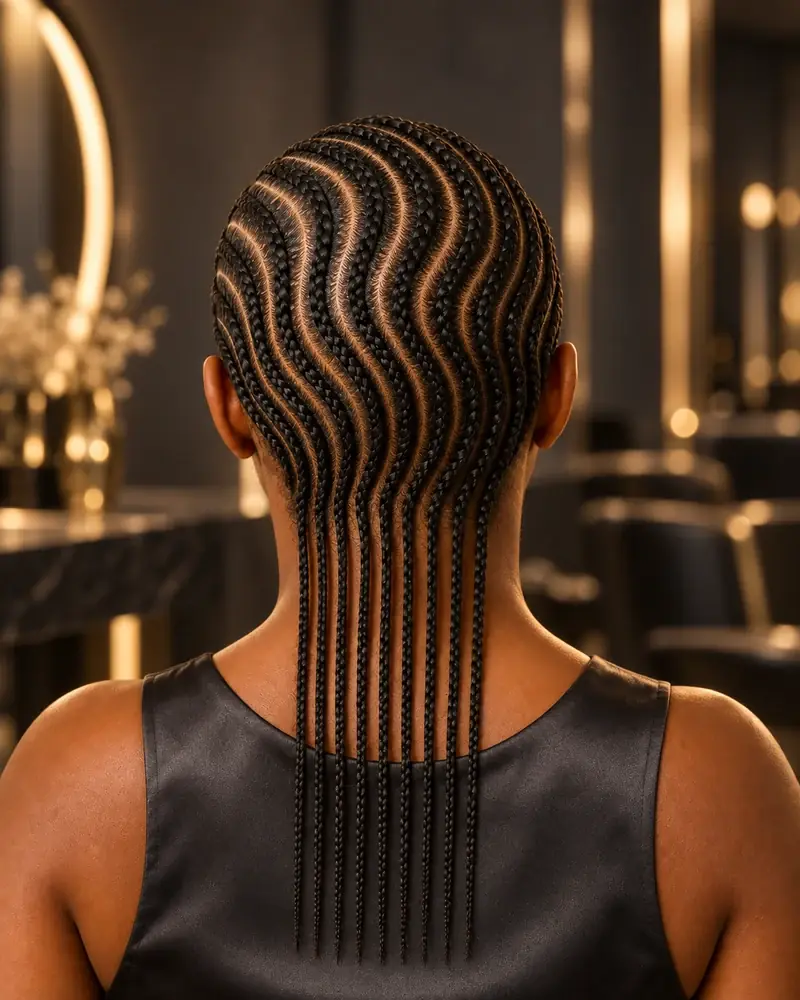
Cornrows form rows braided close to the scalp. Compare six designs with straight lines, zigzag partings, curves and a spiral to choose your pattern.
How to recognise them
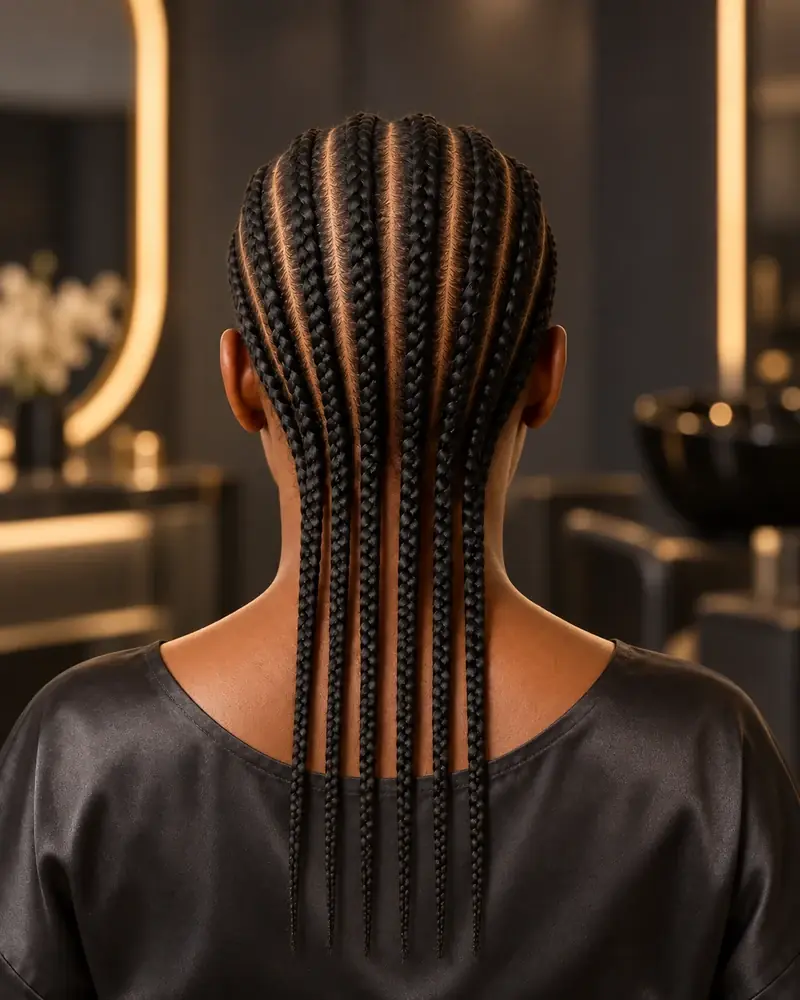
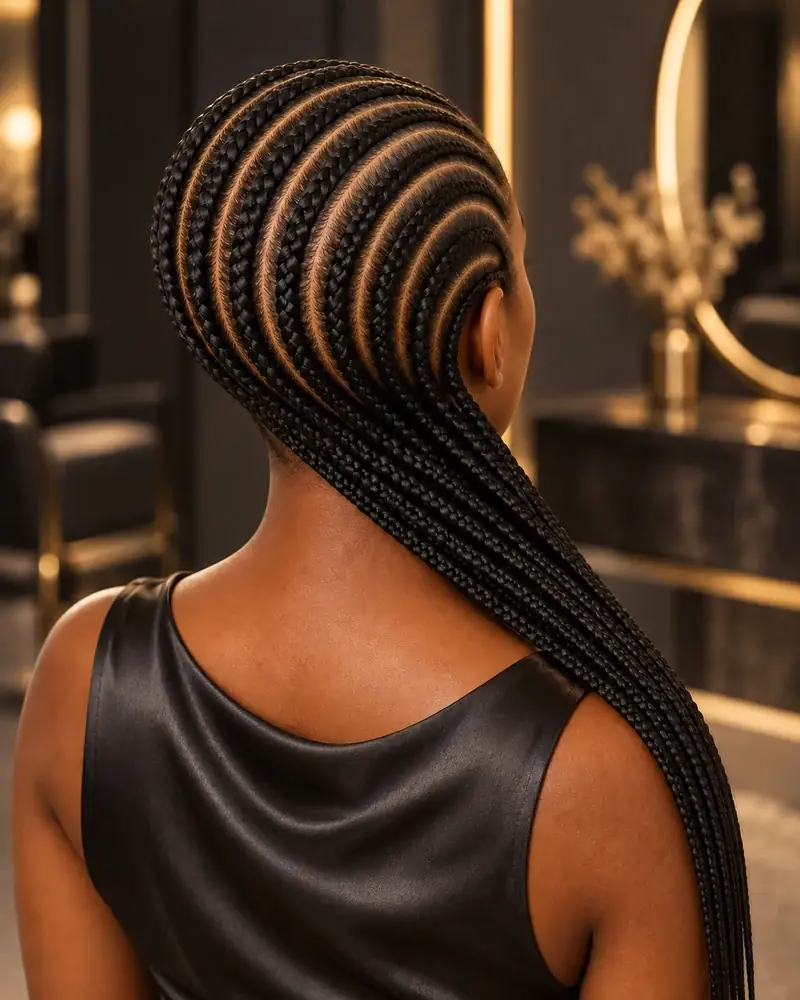
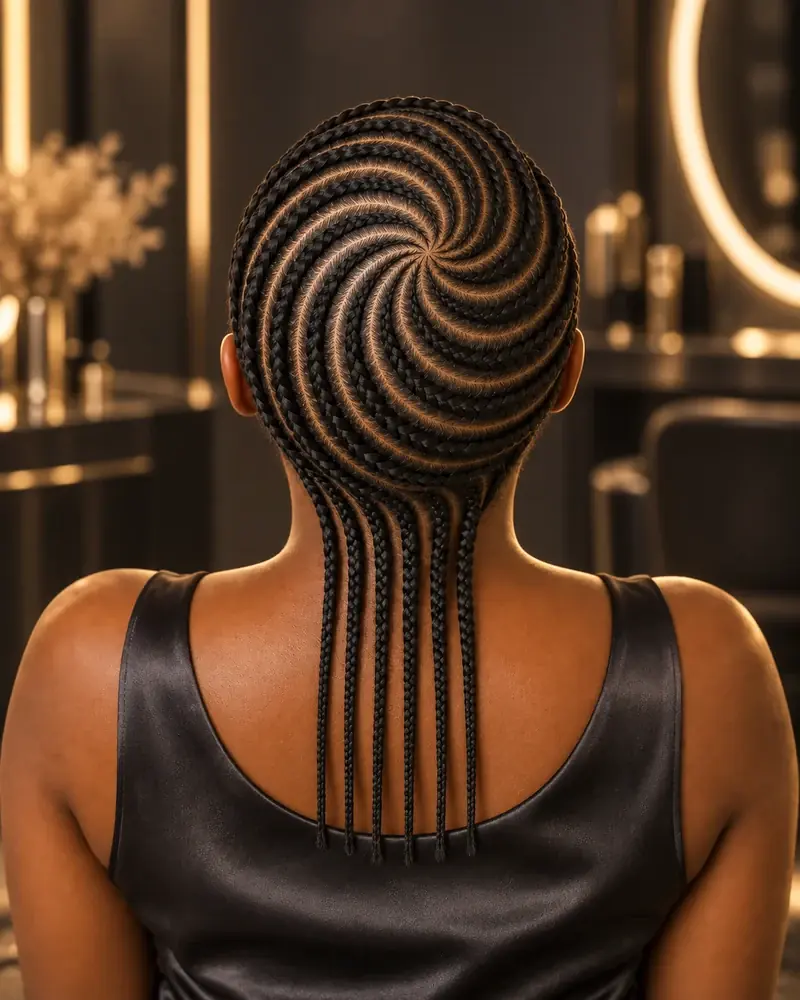
Cornrows are narrow braids worked flat against the scalp, row by row, using the same underhand cross as a Dutch braid. Each row follows its own parting, which is why one technique can produce designs as different as straight lines, zigzags, curves or a spiral.
Count the rows. A Dutch braid usually comes alone or in a pair; cornrows cover the head in many narrow braids with scalp showing between them: those lines of scalp are what draw the pattern.
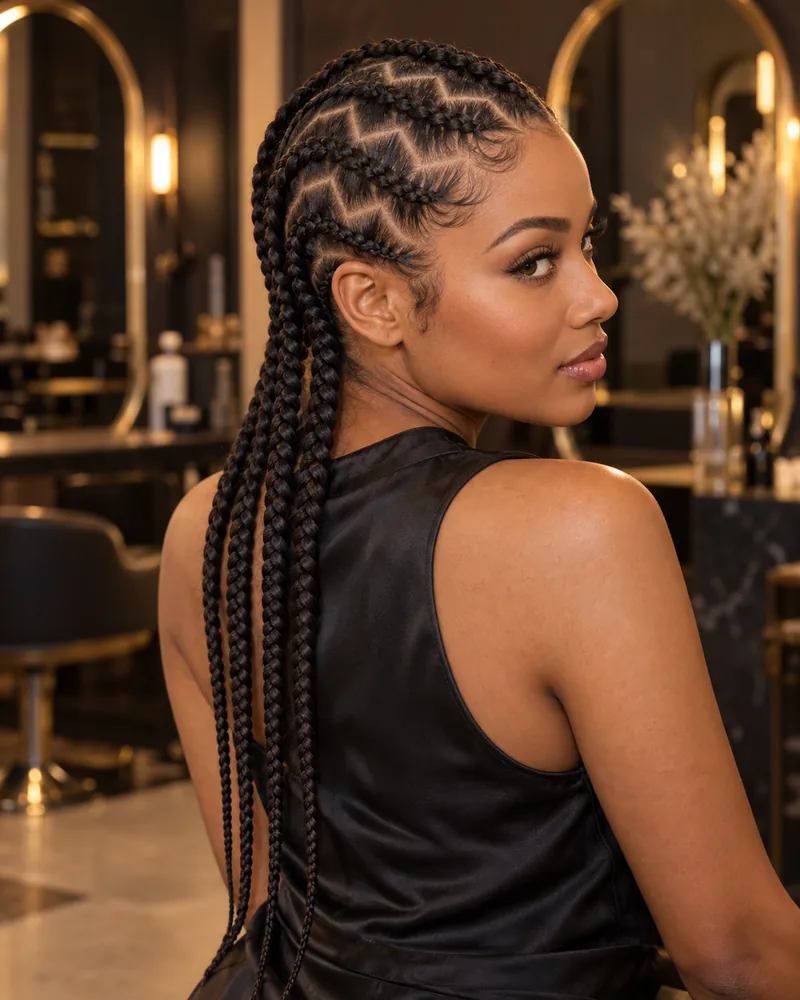
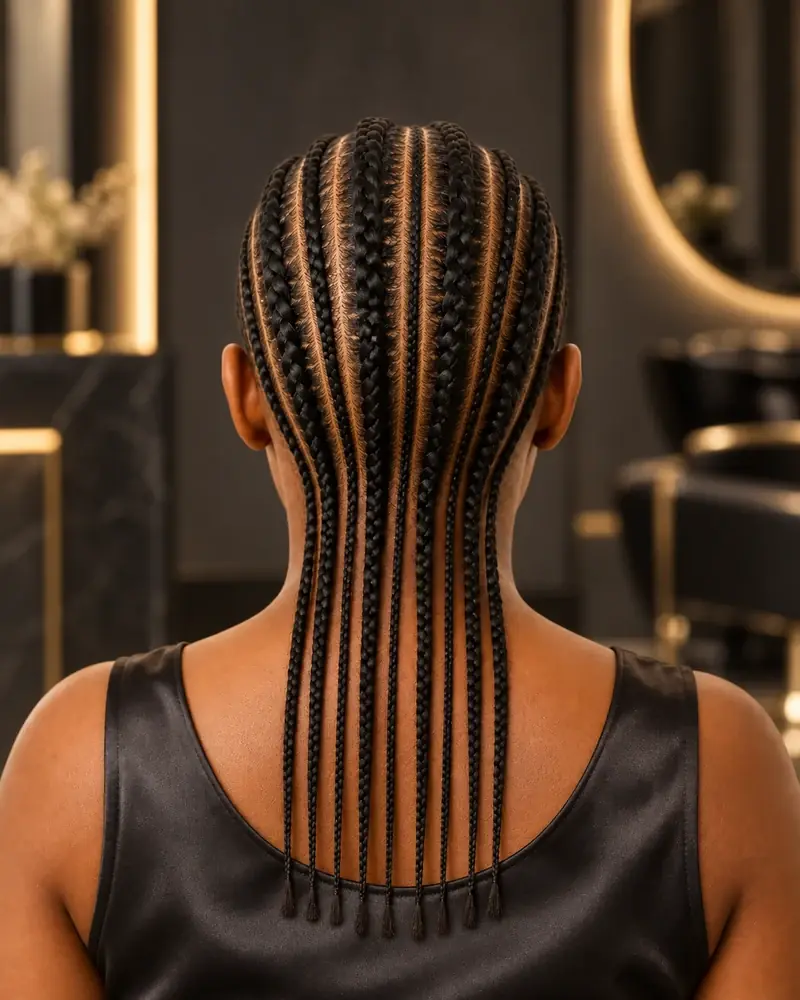
In this gallery, most of the difference between designs lies in the parting:
- in the “Zigzag partings”, the angle comes from the parting and the braid simply follows it;
- “Alternating thicknesses” mixes wide and narrow rows that all run the same way;
- side-swept cornrows curve towards one side and finish together over a shoulder;
- the spiral turns around a centre you can see at the crown.
Finally, check the thickness along each row. If a braid starts fine at the hairline, grows thicker and ends in lengths that fall down the back, hair has been added gradually: those are feed-in braids, which have their own gallery.
What to decide before your appointment
First, the width of the rows. Very fine rows allow more detailed patterns, but the American Academy of Dermatology recommends thicker braids to reduce the pull on your hair.
Next, the direction. If you always wear them swept the same way, as in the side-swept design, the British Association of Dermatologists suggests alternating the direction from one install to the next so the same area is not always under strain.
Ask as well whether they will use only your hair or add extensions, since that changes length and weight, and how they will treat your hairline. The fine hairs at the edges are the most delicate, and the same association suggests leaving them out of the braids.
To practise the movement first, the Dutch braid tutorial explains the underhand cross that every one of these rows repeats.
Care and wear time
Done with your own hair only, cornrows are a short-term style: our guide to how long each style lasts collects salon estimates of one to two weeks and explains why row size changes that.
Because the scalp shows between rows, clean along the partings and dry thoroughly before covering them. At night a soft scarf is usually practical for braids that lie flat; how to sleep with braids shows where to place the ends.
The American Academy of Dermatology lists cornrows among the styles that can cause traction alopecia when they are too tight. If you notice pain, stinging, crusts or lifted skin around a row, loosen it or take it out; if your hairline looks thinner or you see broken hairs, see a dermatologist.
Sources: American Academy of Dermatology: hairstyles that pull on hair and British Association of Dermatologists: caring for Afro-textured hair.