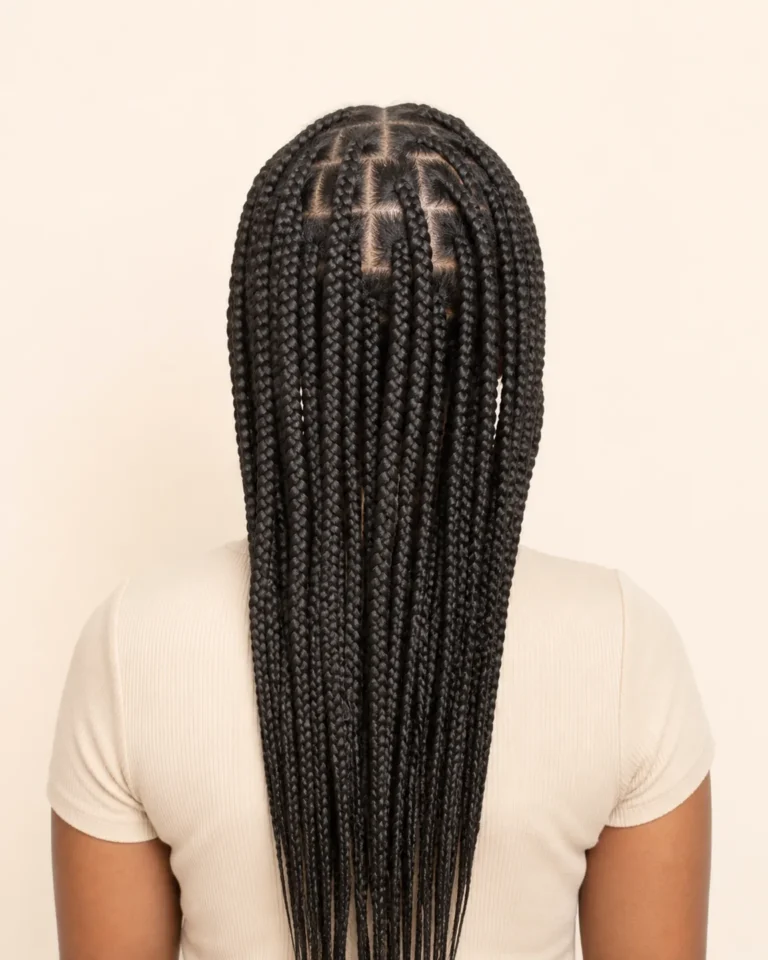
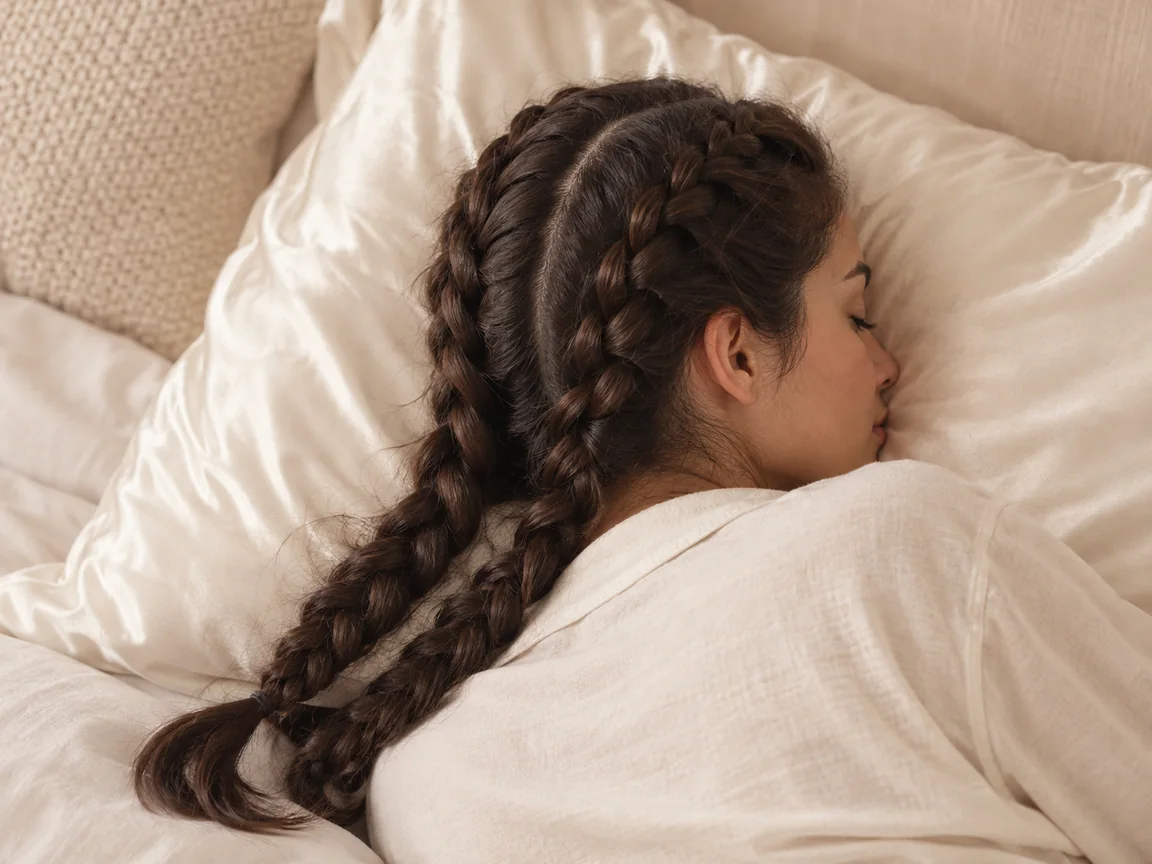
To sleep with braids, make sure the roots and lengths are dry, arrange your hair without pulling at the hairline and choose a comfortable way to protect it. A soft bonnet or scarf and a satin or silk pillowcase are options for reducing friction. You do not need to tighten your hairstyle to keep it looking cared for overnight.
In this guide
Before bed: get your braids ready
- Check that your hair is dry, including the nape, the roots and any areas where several braids sit together. If it is still damp after washing, finish drying it before covering it.
- Remove accessories that feel uncomfortable when you rest your head. Try lying on your pillow for a moment: a clip, bead or hair tie should not sit directly beneath the part of your head resting on it.
- Arrange the lengths with your hands, following the direction of the braids. If you need to hold them together, use a soft hair tie loosely. Check that you can turn your head without feeling a tug.
See how to wash and dry two scalp braids.
Bonnet, scarf or pillowcase: choose what feels comfortable
You do not need all three at once. Start with what you already have and check the fit before buying another accessory. It should not pull on your hair or force you into an uncomfortable sleeping position.
Satin or silk bonnet
Choose one with enough room for the lengths. Tuck the braids in gradually without squeezing them into a tight bun to make them fit. If the edge presses on your temples or leaves marks, adjust it or try another option.
Soft scarf
A scarf can be practical for covering braids that lie close to the scalp. Place it over your hairstyle without dragging at the hairline and keep the knot away from where your head rests. It should stay in place without squeezing.
Satin or silk pillowcase
This is an alternative if you prefer not to wear anything on your head. Lay the braids on the pillowcase, keeping them clear of your neck and face. It can also help if your bonnet tends to slip off at night.
The British Association of Dermatologists includes these options for reducing friction at night in its guide to caring for Afro-textured hair.
Read the British Association of Dermatologists guidance.
How to arrange different braid styles
Two scalp braids or cornrows
Let the tails fall naturally and move them aside if they sit beneath your nape. There is no need to cross them tightly or pull the roots taut again. Try your usual sleeping position before putting on a scarf.
Long box braids or knotless braids
Spread the lengths to the sides or above the pillow, whichever feels comfortable. If you gather them together, avoid pulling all the hair into a tight bun. A roomy bonnet lets you tuck them in without forcing sharp bends.
If your style includes loose strands, as some boho braids do, separate them with your fingers before covering your hair. Do not pull at a tangle to force it inside the bonnet.
If your braids hurt on the first night
You should not put up with pain just to preserve a hairstyle. Loosen or take down the area that is pulling. If you notice stinging, crusts or hair loss, or discomfort persists, seek advice from a dermatologist. A different pillow will not fix braids that are too tight.
Signs of excessive tension explained by the American Academy of Dermatology.
In the morning
Take off your covering without dragging the braids and remove any hair tie you used. Arrange the lengths with your hands and notice how your scalp feels. You do not need to redo the hairstyle every morning.
If you notice a little frizz, do not add product out of habit. Decide what needs attention and follow the directions for the product you use. Wash your bonnet, scarf and pillowcase according to their care labels and let them dry before using them again.
Common questions
Can I go to bed with damp braids?
It is better to finish drying your hair before bed. Do not use a bonnet as a way to dry your braids overnight. If you usually wash them late, allow more drying time or choose another time to wash.
Cleveland Clinic: why it is best to go to bed with dry hair.
What if my bonnet slips off?
Check the size and fit rather than tightening it more and more. If you cannot get comfortable, try a satin or silk pillowcase. No single combination suits every hair length and braid style.
Continue your braid care routine
Everyday braid care: the full routine.
How long box braids and knotless braids last and when to take them down.
An educational guide by AC Trenzas Studio. Sources reviewed on 16 September 2026. Hair care guidance does not replace an assessment by a dermatologist.