
 English
Knotless braids start with your own hair, with extensions added gradually and no knot at the root. Compare six designs: jumbo, medium, small, different parting patterns and curled ends.
How to recognise them
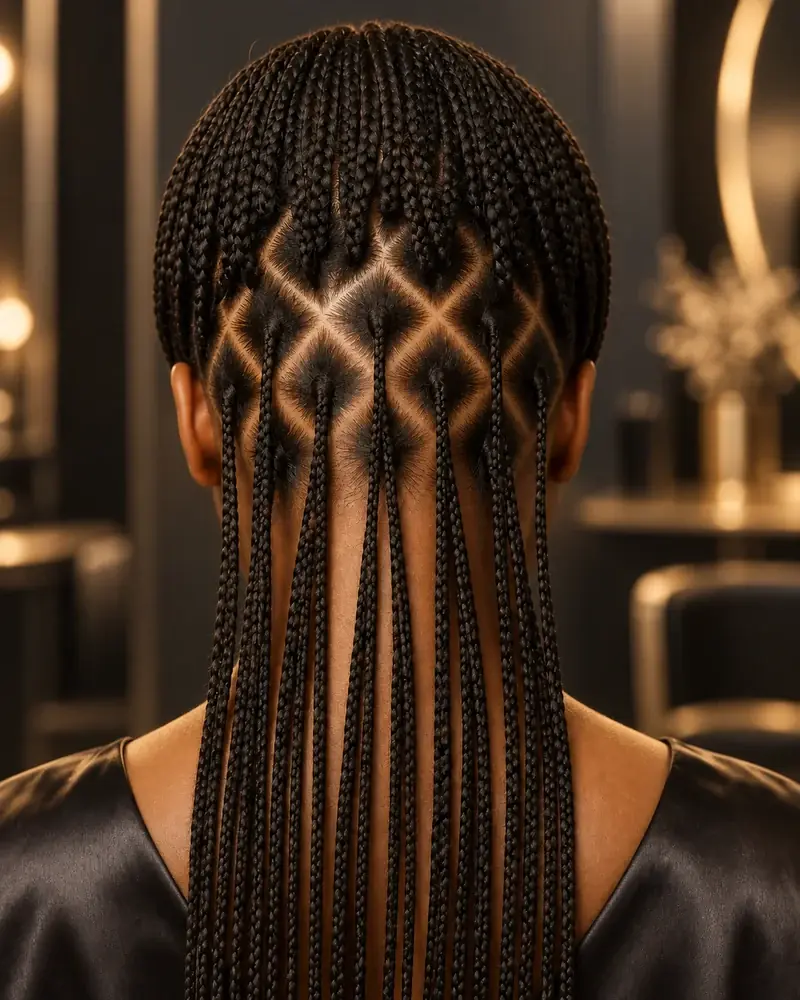
Get close to the root. The first few crosses are your own hair, which sometimes shows in the colour or texture, and the braiding hair comes in a little lower without a step. If you see a small knot or a bulky start, they are most likely traditional box braids.
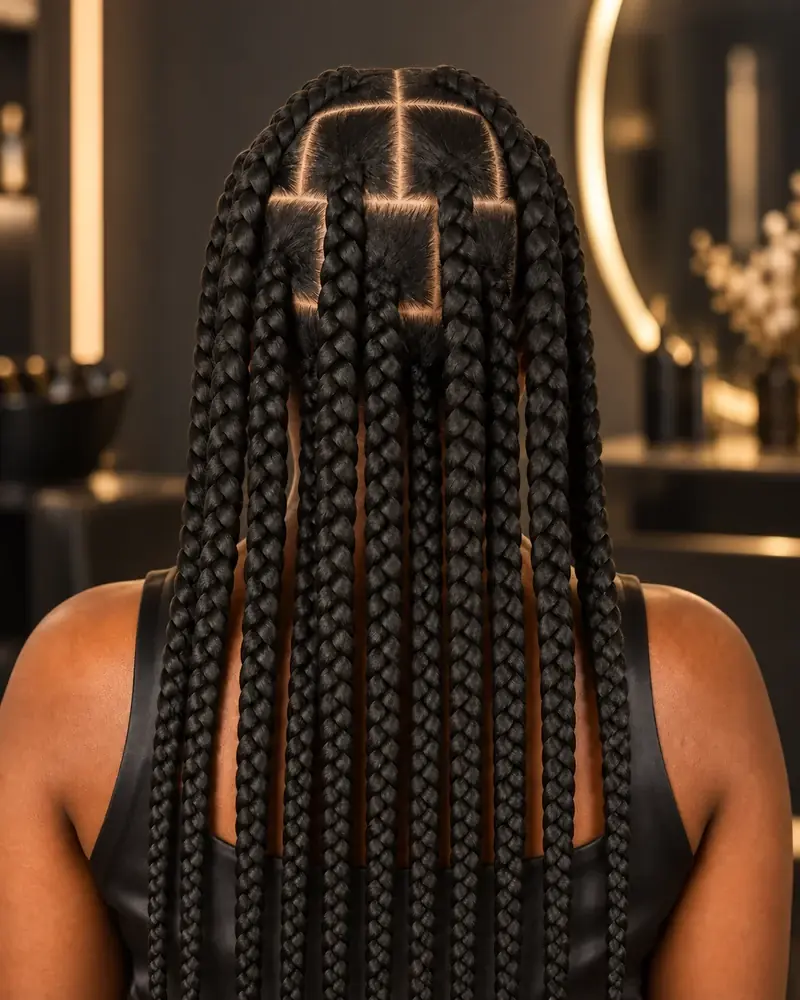
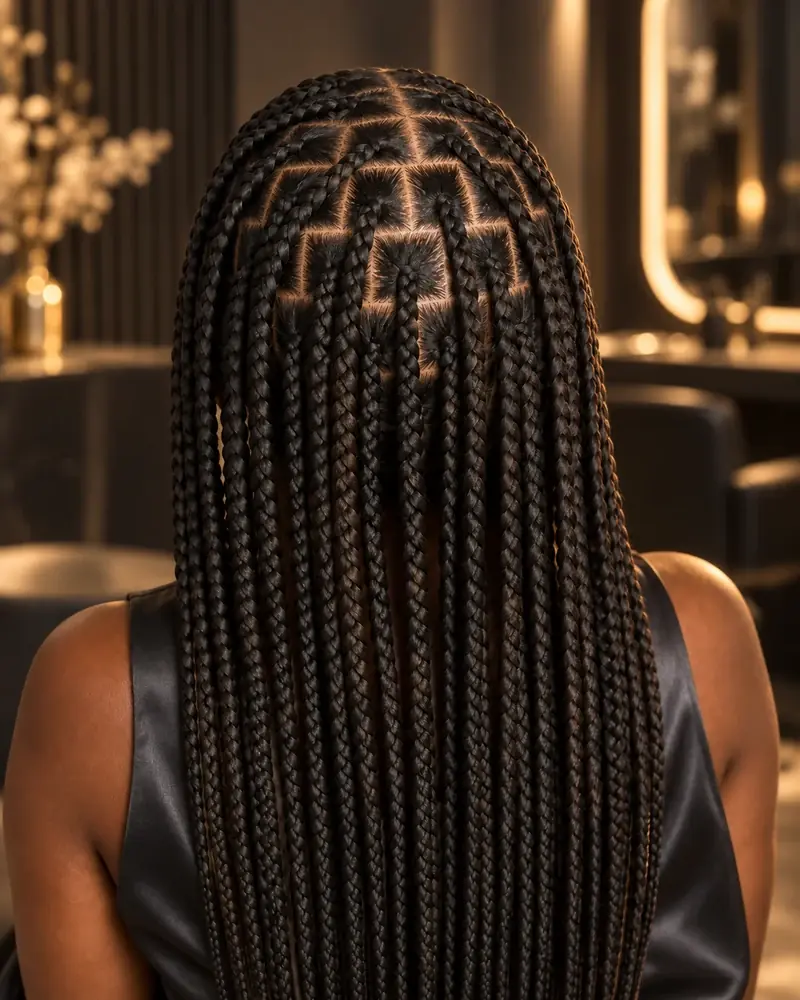
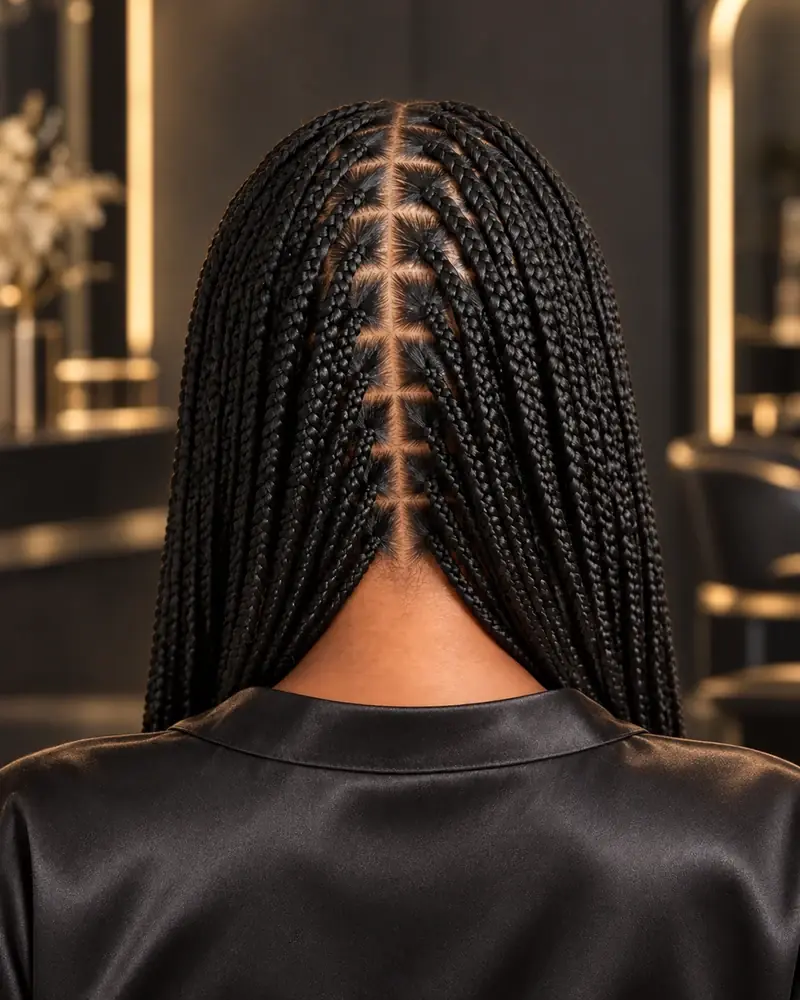
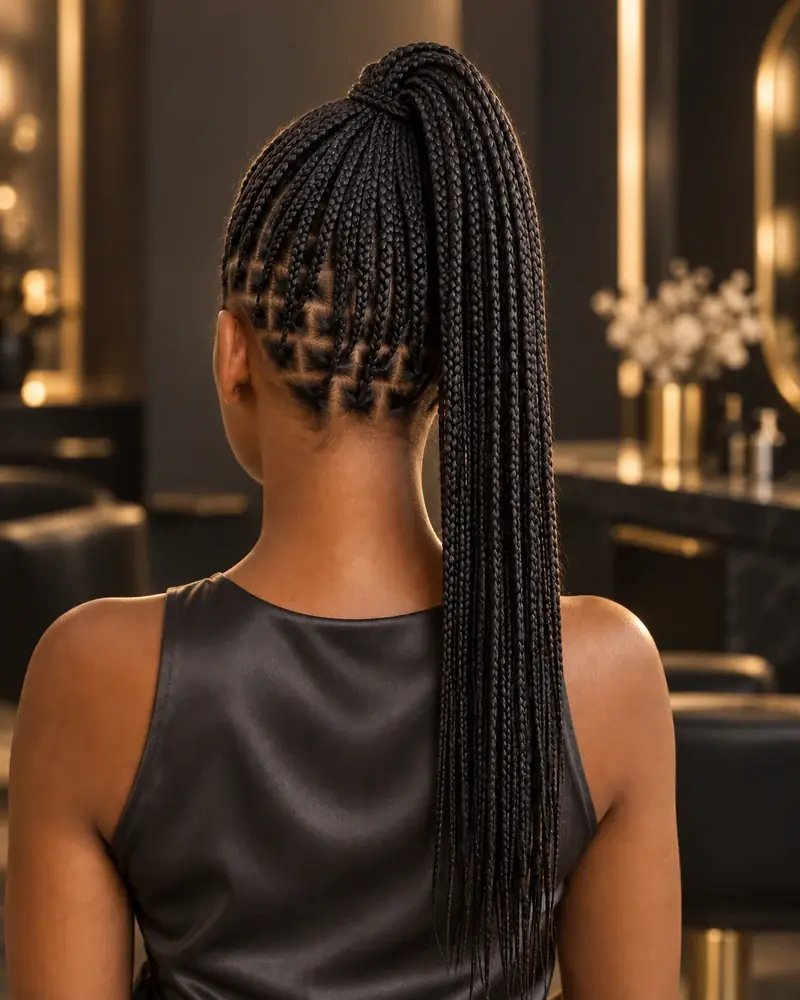
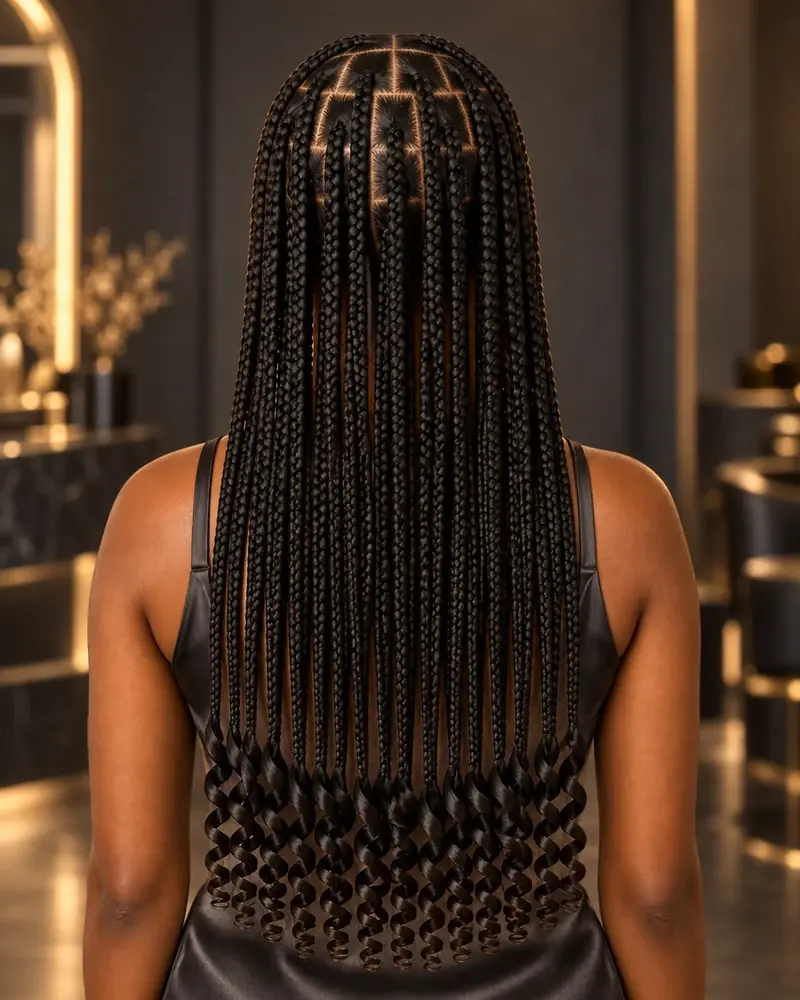
In these photos, jumbo braids are the thickest, medium braids sit in between and small braids are narrower. Length and parting patterns are separate choices. If you are unsure about sizes, see the visual guide to box braid sizes.
The ends are the other clue. In the “Knotless French curl” design the braid stays closed almost to the end and only the tips open into curls. If curls also come out between the braids at different heights, you are looking at boho braids.
What to decide before your appointment
Choose the size for your hair, not just for the photo. Whether jumbo or small, each braid has to match the amount of your own hair in its section, because a thick braid on a small section pulls on it. And knotless does not mean tension-free: the name describes how the braid starts, not how tightly it is done.
Before you book, ask:
- what size they will do and roughly how many braids, with a sample if possible;
- the finished length, how much braiding hair they need and whether it is included;
- whether French curl ends use a different curly hair and how to look after that part.
One warning worth knowing from the start: the British Association of Dermatologists says it should never be necessary to take painkillers for a sore scalp after braiding. If it hurts, it is too tight, knotless or not.
Care and wear time
For medium knotless braids we plan the take-down after four to six weeks, the same as box braids, because having no knot does not extend that on its own. For jumbo braids, salon estimates vary quite a lot and you should not simply copy the medium timeline; the jumbo braids section of our wear-time guide.
At night, spread the lengths to the sides or tuck them into a roomy bonnet without forcing them to bend, as described in how to sleep with braids. If you have curly ends, separate them with your fingers before covering them.
Pain, stinging, crusts or lifted skin around a braid are reasons to loosen or remove it, even if the style still looks good.
Sources: British Association of Dermatologists: caring for Afro-textured hair and American Academy of Dermatology: hairstyles that pull on hair.