
 English
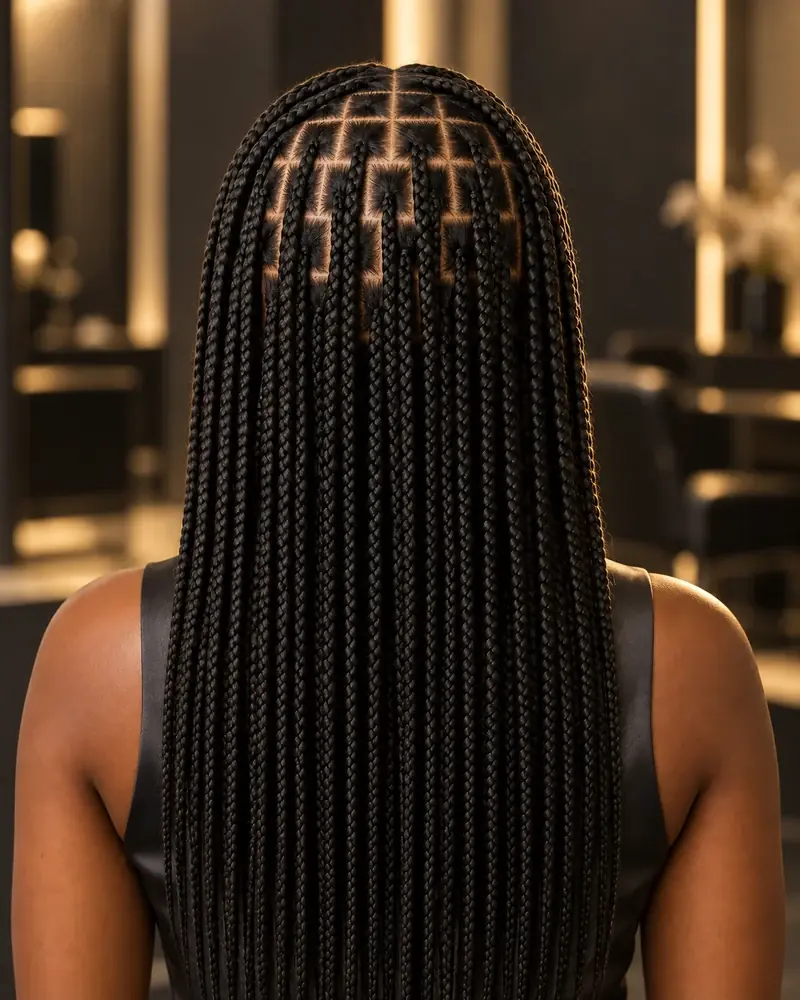
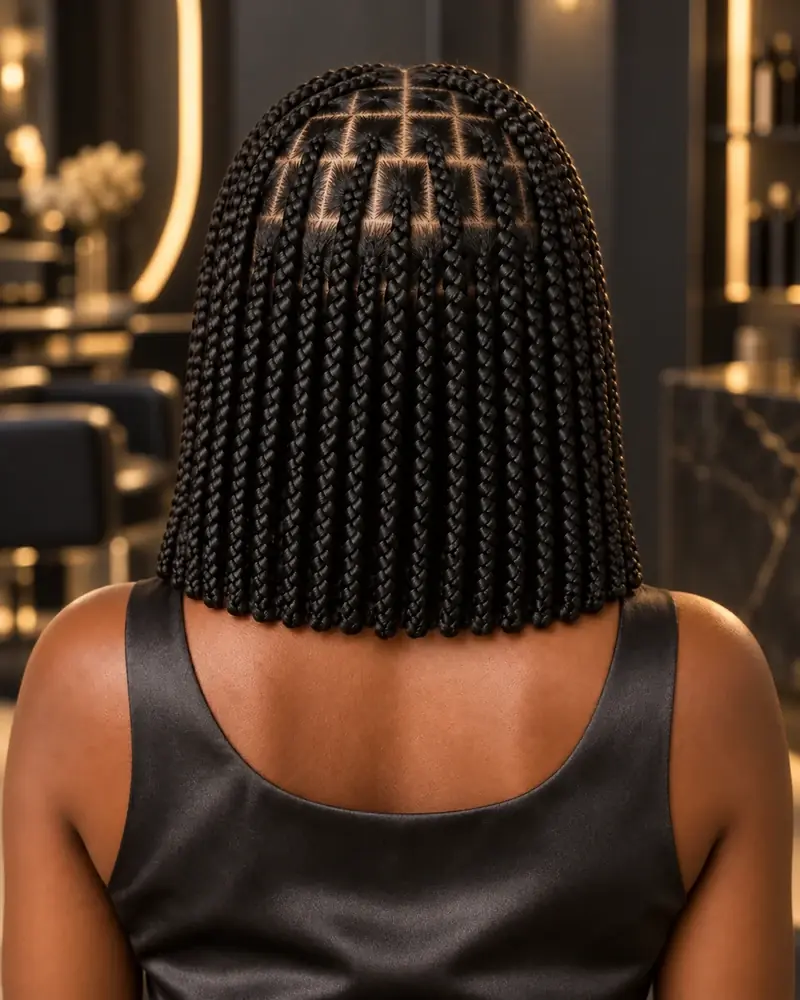
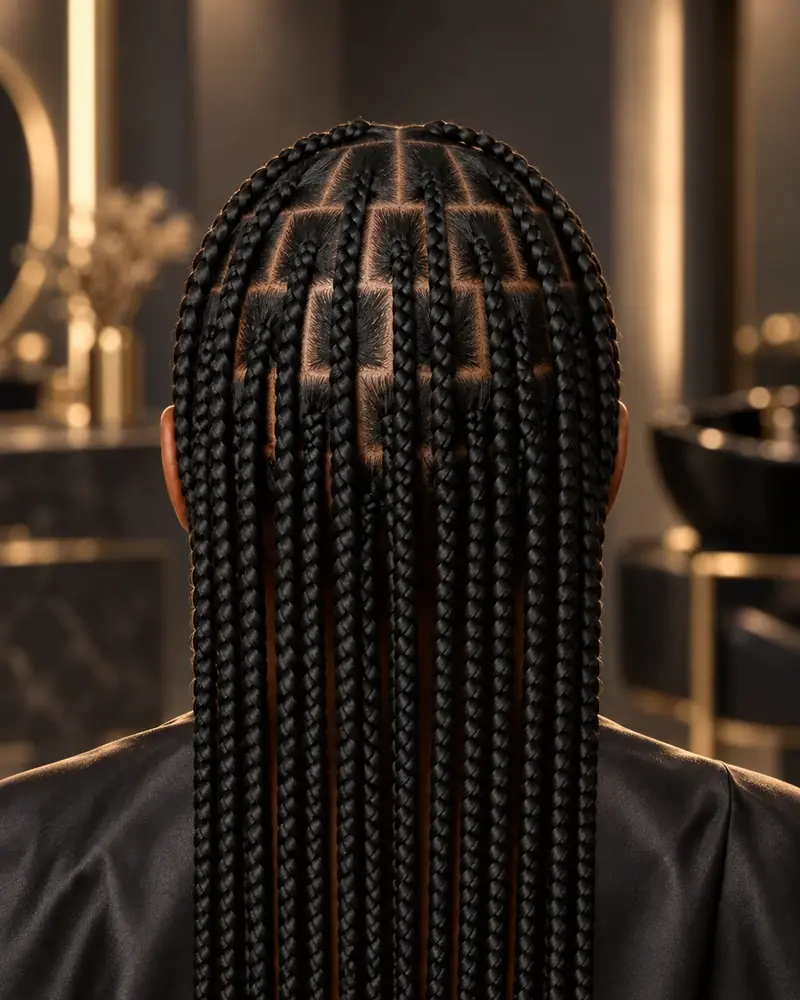
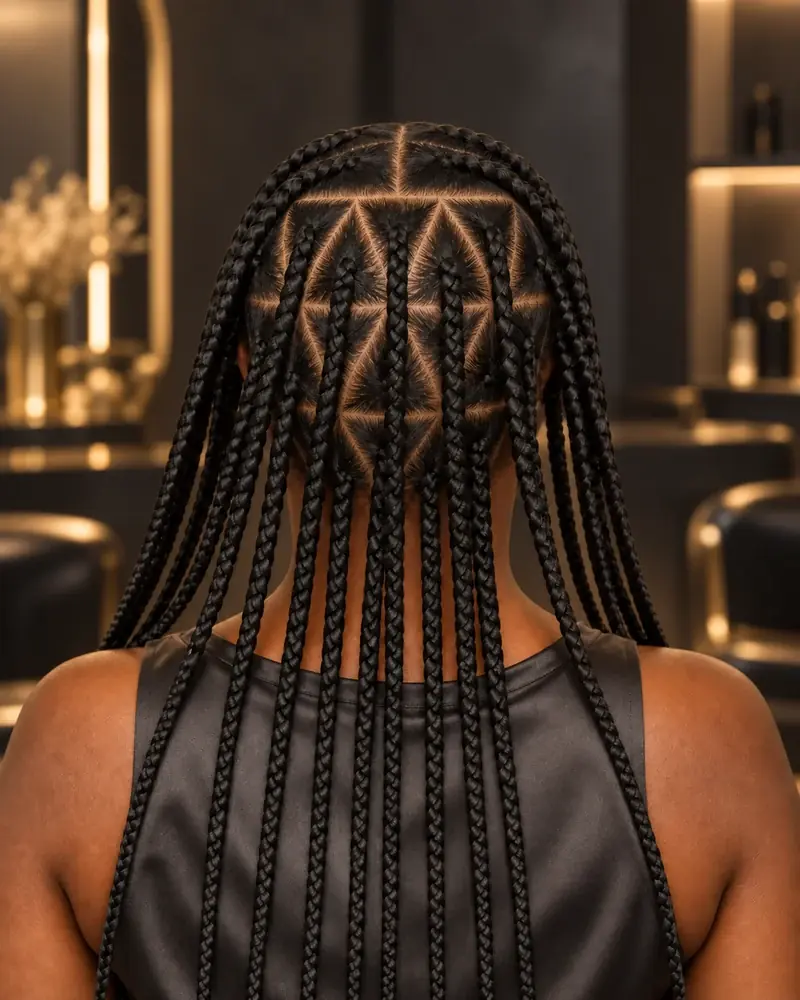
Medium box braids have a medium thickness, with extensions attached at the root. Compare six designs with different parting patterns, a bob length and a half-up style to choose a clear reference for your appointment.
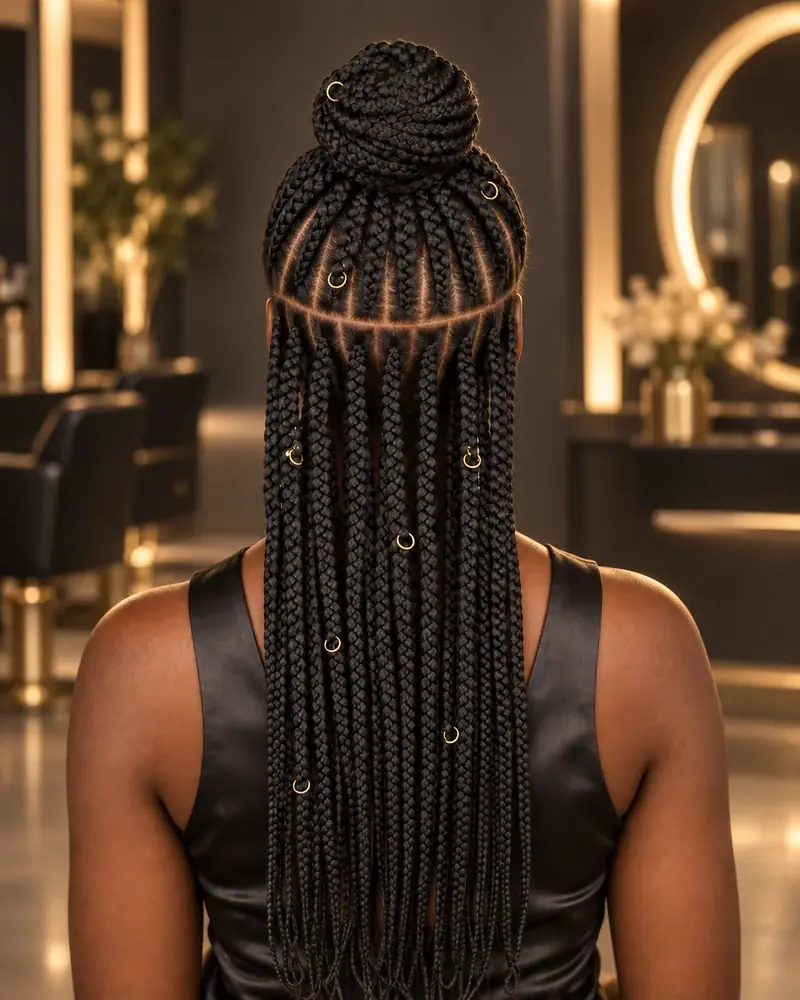
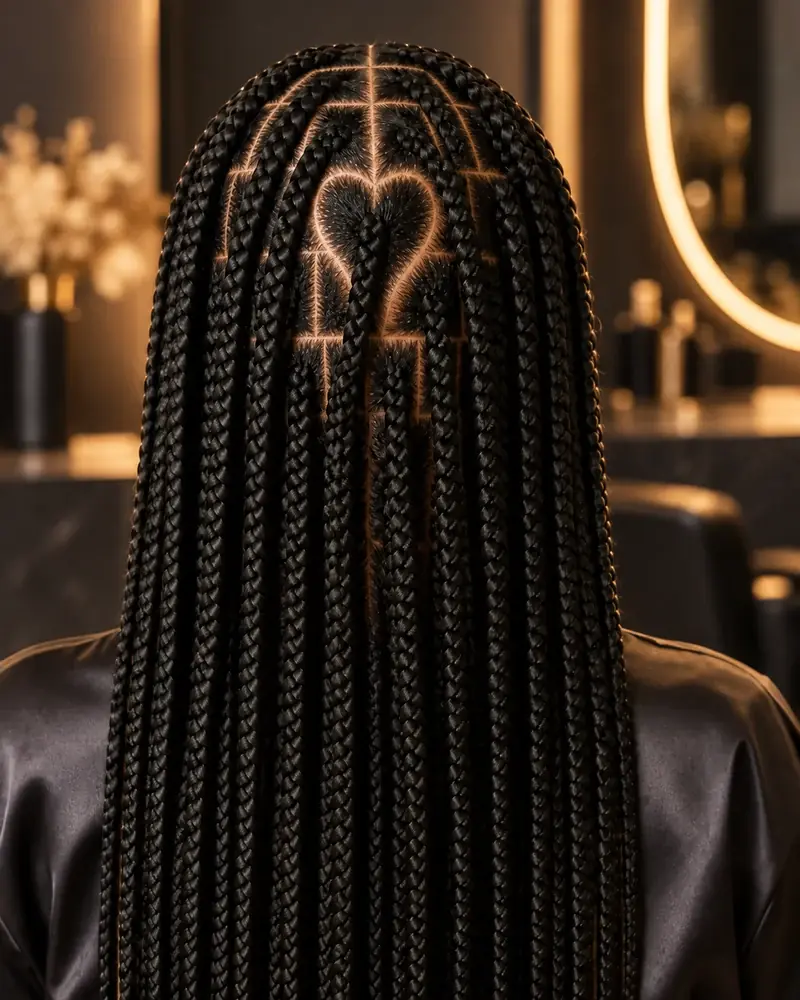
How to recognise them
The clue is at the root. Because the extension is attached at the very start, you will see a small knot or a compact base with some volume, and the braid is at its full thickness almost from the first cross. Knotless braids, by contrast, start flat and thicken gradually.
The shape of the sections is what sets the designs in this gallery apart. Square sections line up in rows; the “Staggered pattern” shifts each row against the one before so the partings do not line up and the style looks fuller; triangles and the heart change the pattern at the root without changing the technique.
Some salons list them as single braids or single plaits, names that point to the same idea: one braid per section.
What to decide before your appointment
Which size should you choose? Compare small, medium, large and jumbo.
Length changes the weight more than anything else. The American Academy of Dermatology recommends keeping braids short because longer hair is heavier and pulls more; a bob like the one in this gallery puts far less load on the roots than waist-length braids.
The size has to match the hair in each section. A thick braid hanging from a very small section pulls on it, so ask to see how the sections will be divided before they start. Ask as well how much braiding hair will be needed, whether it is included and how long they expect your hair to take.
If you like wearing them up, choose styles that do not rely on tight roots; these box braid hairstyles show loose ponytails and buns. And if it is the tension at the start that makes you hesitate, read how knotless and box braids differbefore booking: the name of the technique does not guarantee a comfortable braid on its own.
Care and wear time
We plan to take this style out after four to six weeks; our guide to how long box braids last explains where that figure comes from. The British Association of Dermatologists advises against keeping braids in for longer than six weeks, and if your scalp needs them out sooner, there is no reason to wait.
While you wear them, wash along the partings and make sure the roots and lengths dry completely. At night, a roomy bonnet holds them without squeezing them into a tight bun.
When it is time, open each braid from the end and take extra care where it joins the root. The guide to taking out braids and detangling your hair has the full process, including knots that will not give.
Sources: American Academy of Dermatology: hairstyles that pull on hair, British Association of Dermatologists: caring for Afro-textured hair, Unruly: guide to box braid sizes and Makeup.com (L’Oréal): medium knotless braids.