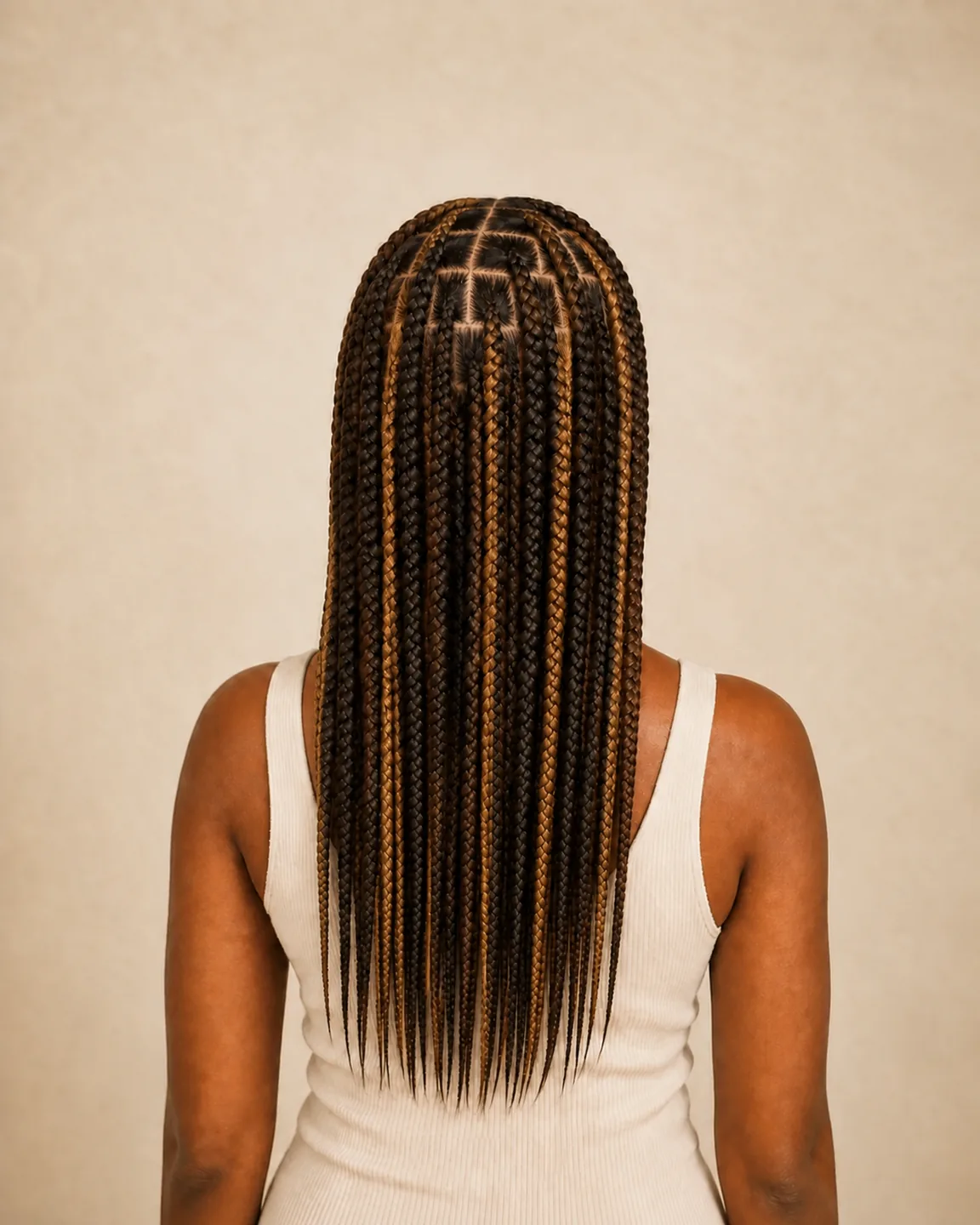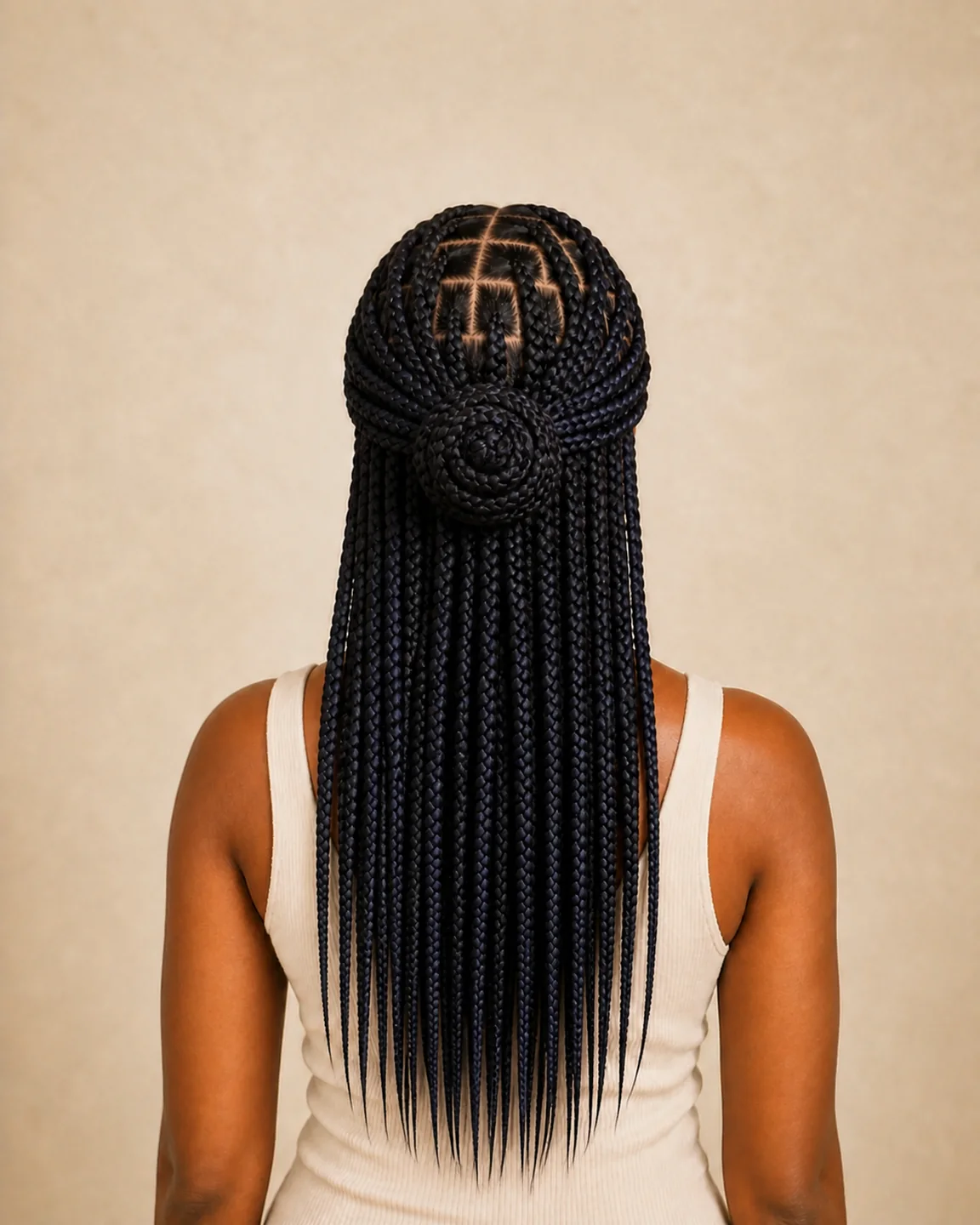
Knotless and traditional box braids look similar along their lengths, but begin differently. The main difference is how extensions are added.
Quick answer
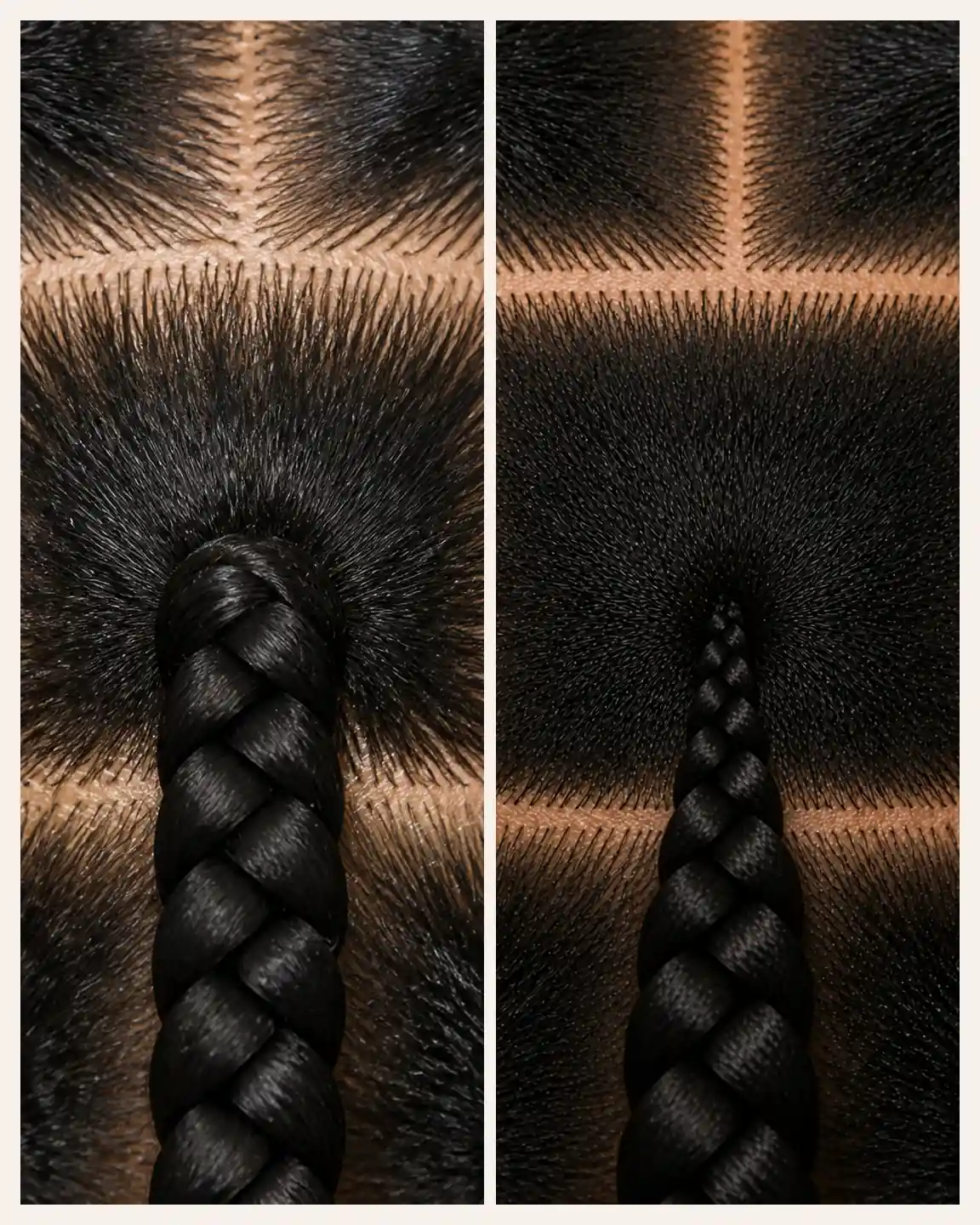
In traditional box braids, extensions are usually attached at the root. Knotless braids start with natural hair, with extensions added gradually. Traditional braids usually have a more defined base, while knotless roots are flatter. Initial movement and styling time may also differ, but the technique alone does not determine weight or tension.
Knotless box braids are a type of box braid. Both use individual sections; the difference is how the braid starts and how extensions are added. In this comparison, we use “traditional box braids” to distinguish them clearly.
You can see more designs in the traditional box braid gallery and in the knotless box braid gallery.
The difference is in how each braid begins
01 · Traditional technique
Box braids
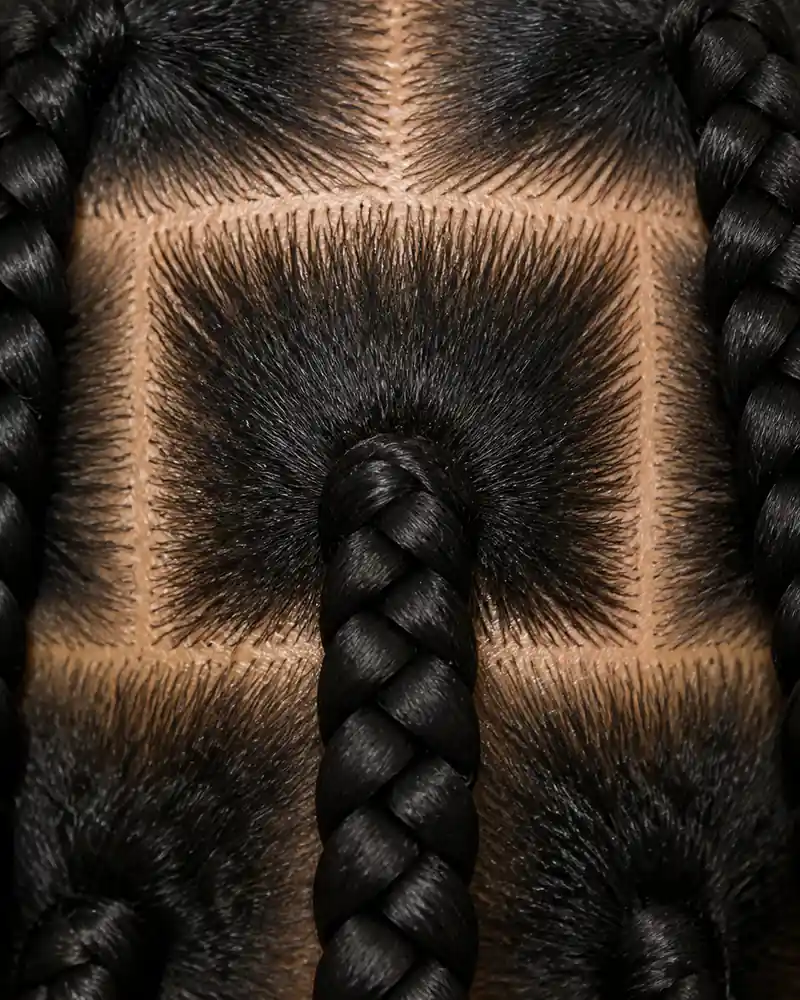
The hair is divided into sections, and extensions are usually added at the root. The exact grip varies by method, so the base may be more or less pronounced.
The base usually looks defined and may feel firm at first. Firm does not mean painful: if it pulls, stings or lifts the scalp, it needs loosening.
02 · Feed-in technique
Knotless box braids
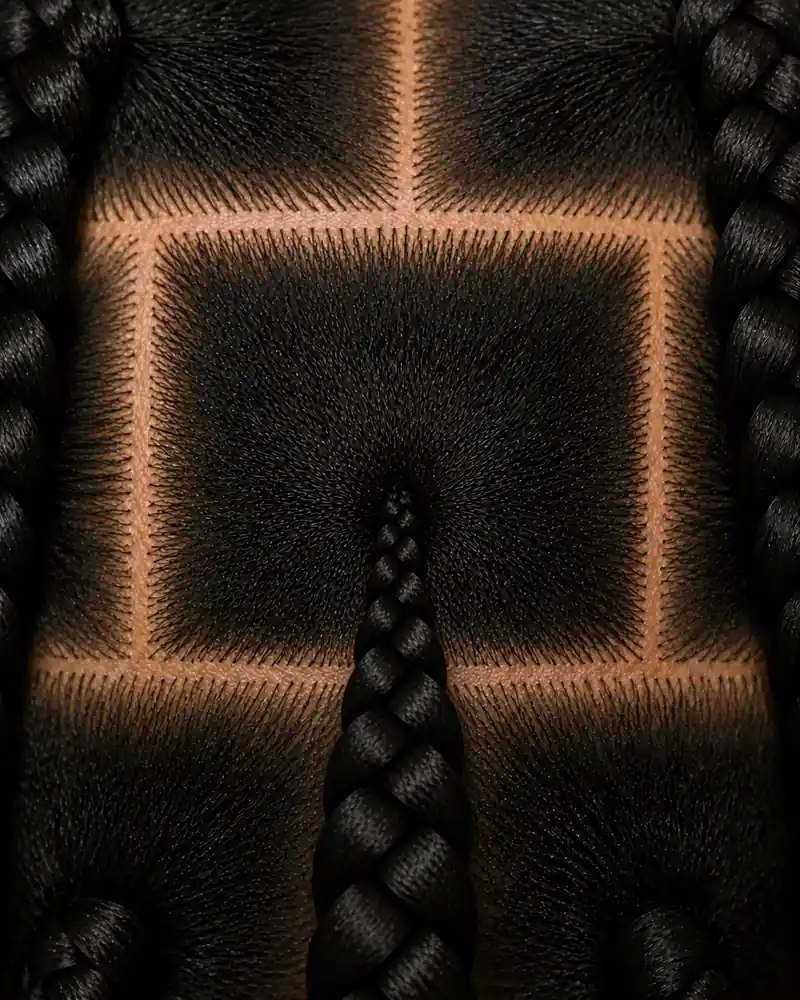
The braid begins with a few crossings of natural hair. Small portions of extensions are then added, gradually increasing the thickness.
The base is flatter and the transition less visible. Each added portion needs careful control to avoid bumps and sudden changes in thickness. Gradual addition makes the transition easier to control, but does not by itself remove the risk of tension.
Quick comparison
| Appearance | Traditional box braids | Knotless box braids |
|---|---|---|
| Home | Extensions attached from the root | Natural hair with extensions added gradually |
| Finish | More defined base | Flatter base |
| Movement at the start | May feel firmer | Usually moves more freely |
| Tension and weight | They depend on section size and the amount and length of the extensions | They also depend on section size and the amount and length of the extensions |
| Styling time | Often less | Usually longer because extensions are added gradually |
| Price | May be lower | May be higher if more time is needed |
Are knotless braids always more comfortable?
Not necessarily. Adding extensions gradually may allow more movement at first, but the word knotless does not guarantee a tension-free braid. Section size, the amount and length of the extensions and the braider's grip remain decisive.
The sign you should not treat as normal
A braid does not need to hurt to look good. If braiding hurts, say so straight away and ask for the section to be loosened or redone. You do not need to wait several days for the roots to “loosen up”.
Too small a section of natural hair, an overly tight grip or too much extension hair can cause harm with either technique. The American Academy of Dermatology also lists stinging, scabs, scalp lifted by tension, breakage and changes to the hairline as warning signs.
The British Association of Dermatologists recommends protecting fine hairs around the hairline and avoiding extensions that are too long or heavy. Decorations add weight too.
Time, price and wear duration
Time
Knotless braids usually take longer because the extensions are added in several portions. The number, thickness and length of the braids, along with hair density, greatly affect the actual time needed.
Price
Compare braids of the same size and length. Before deciding, check whether the quote includes braiding hair, preparation and finishing.
Wear duration
The technique alone cannot guarantee a set number of weeks. Braid size, new growth, cleanliness, weight and daily care all matter. Pain, build-up, breakage or changes to the hairline are reasons to take braids out sooner.
Whatever the technique, gentle washing and complete drying help keep the scalp in better condition. You can follow our tutorial on caring for and washing braids.
Which might suit you better?
You may prefer knotless braids if you want
- a flat base;
- movement from day one;
- a subtle transition between your natural hair and the extensions.
Allow for the process to take longer.
You may prefer the traditional technique if you want
- a more defined base;
- a clearly defined finish at the roots;
- an option that may better suit your time or budget.
When done properly, these should not hurt either.
If your scalp is sensitive, do not choose by the technique's name alone. Ask how much hair will be added, how long it will be and how the edges will be protected. Heavy or tight knotless braids can also cause discomfort.
When to postpone either technique
Wait if the scalp has wounds, inflammation, pain, scabs or irritated areas. If you notice thinning, broken hairs or a receding hairline, do not add more tension and consult a dermatologist.
If discomfort or hair loss persists, consult a dermatologist before reinstalling extensions. Knotless is a technique, not a treatment or a guarantee against traction alopecia.
What to ask before getting braids
- How will the extensions be added at the roots?
- How much hair will be used, and is it included in the price?
- Can the more delicate hairs around the hairline be left out?
- How much time and money would the same design take with each technique?
- Can a section be redone if it feels tight?
A good installation has clean partings, well-controlled extensions and comfort from the start. The best option gives you the finish you want without putting stress on your hair or scalp.