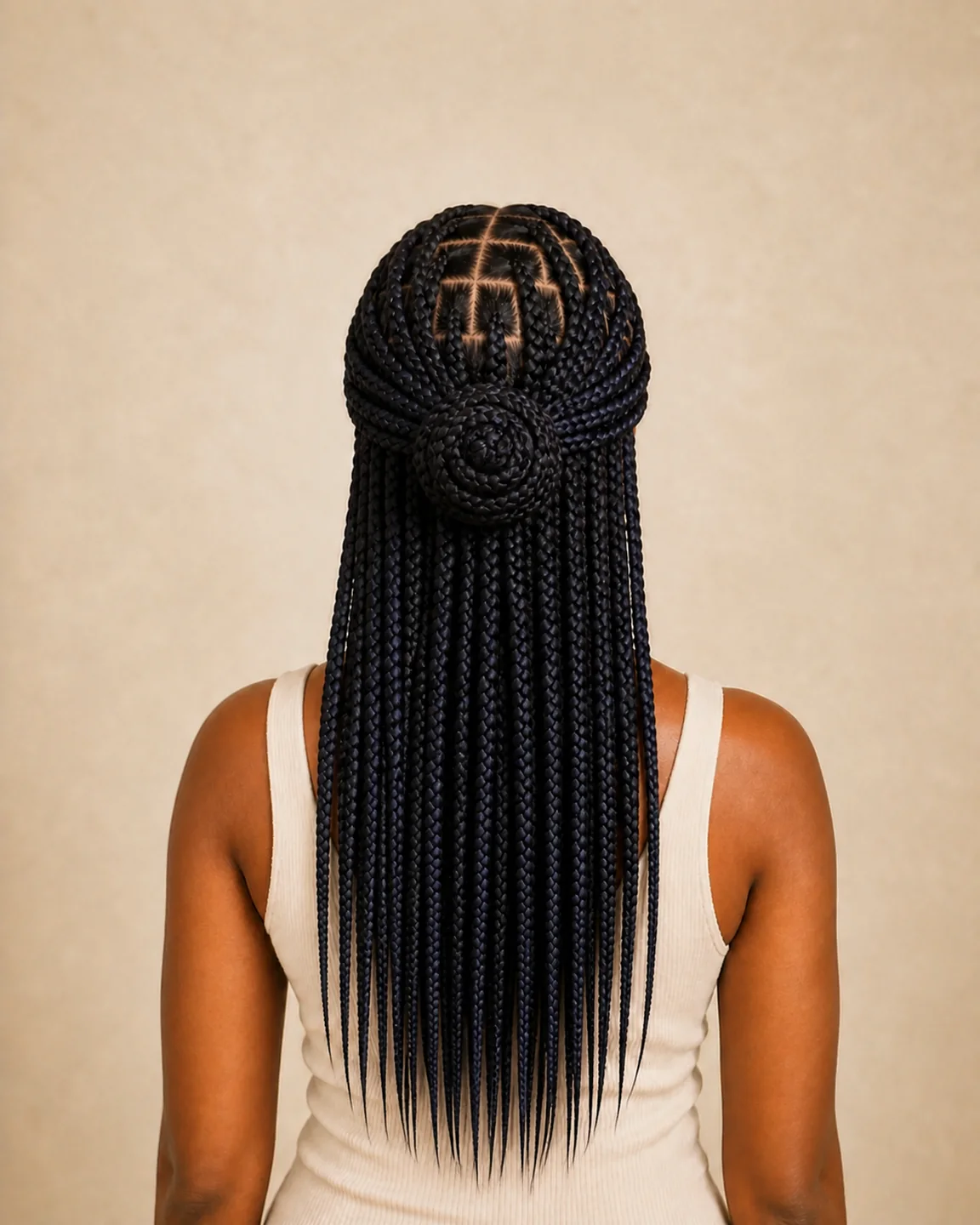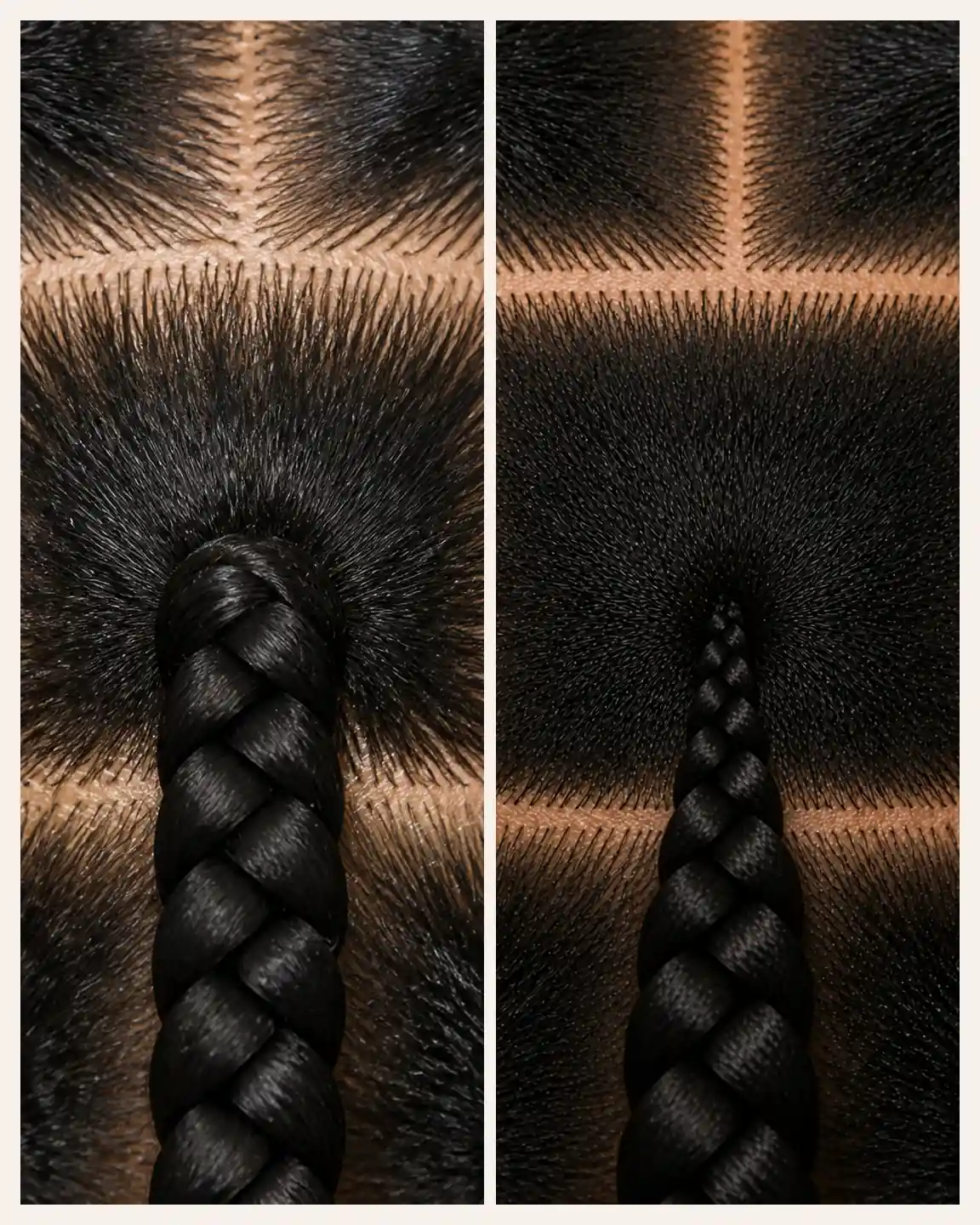
To change the look of braids without changing the technique, think about three things: the main colour, the shade that complements it and where each will appear. Similar shades create depth. Light against dark emphasises movement. An accent in just a few braids can change the whole look without dominating it.
These eight ideas are starting points for a clear visual reference. They are not product codes or fixed blends: adapt the intensity, placement and length to the look you have in mind.
Before choosing extensions
The images in this guide are editorial illustrations, not samples of a specific product. Fibre shine, lighting and screen settings can significantly change how colour appears. Names and colour codes also vary between manufacturers.
Compare the reference with the actual extensions in natural light. For a consistent result, try to use the same brand, range and batch throughout the hairstyle.
How to use these ideas
To make the comparison useful, all images show the same braid thickness, length, partings, pose and lighting. Only the colour changes, so you can see what each combination contributes.
When saving a reference, keep more than just the photograph. Note the main shade, where you want the second colour and whether you prefer an even blend, face-framing placement or colour only at the ends.
Eight combinations to save as references
1. Natural shadow: natural black and deep black

This is the most subtle option in the selection. The two shades almost look like one, but their difference appears when light catches the texture and movement of the braids.
Natural black can make up most of the style, with the deeper shade interspersed. The result looks consistent without being completely flat.
A good first reference if you want to change the finish without making the hairstyle look distinctly two-tone.
2. Soft cocoa: dark chocolate and hazelnut

Chocolate creates a deep base and hazelnut adds lighter areas without a sharp contrast. It is a warm blend that is easy to distribute across the head.
For a blended result, place hazelnut braids among the dark ones rather than in blocks. To make the lighter shade stand out, concentrate it at the sides or increase its presence towards the ends.
Compare the two fibres together before choosing. Shades called “chocolate” or “hazelnut” can vary considerably between brands.
3. Honey highlights: dark brown and honey
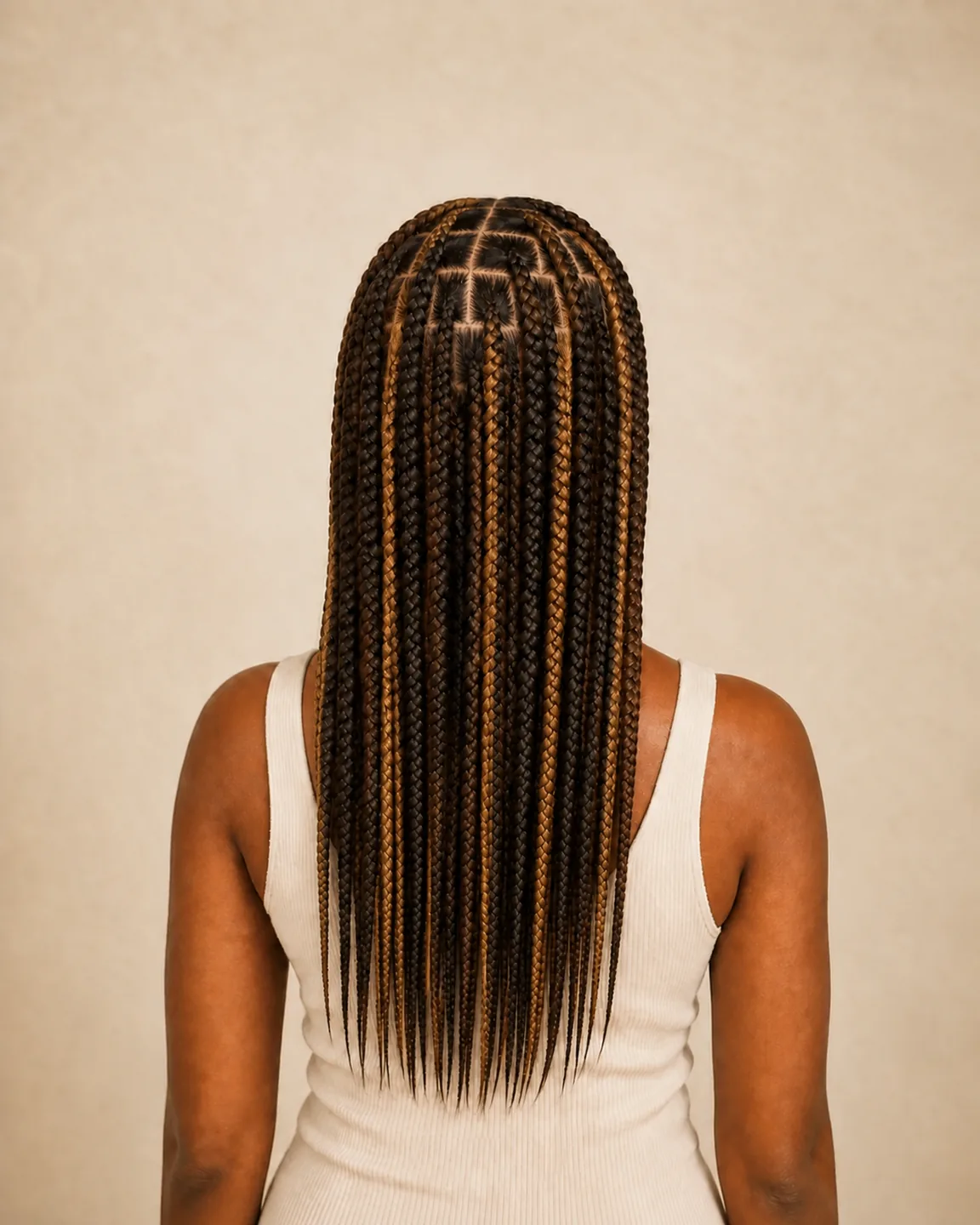
Here the contrast is clearly visible. The dark base adds depth, while the honey braids create highlights that move with the hair.
Placement completely changes the result. Light fibres spread across the head create a highlighted effect. Concentrated in a few areas, they become a much more graphic detail.
If you do not want honey to dominate, use it as an accent and keep dark brown as the main colour.
4. Copper cinnamon: chocolate and copper

Copper adds colour without the contrast of a light blonde. Paired with chocolate, it creates a warm blend in which both shades remain recognisable.
Alternate the shades from the roots for an even blend, or reserve copper for the mid-lengths and ends. The second option keeps the base more understated, with the colour change appearing further down.
Copper can look very different depending on the light. Check the extensions indoors and beside a window before deciding.
5. Deep wine: burgundy and plum

Burgundy and plum create a dark yet colourful combination. In soft light they can look very deep; brighter light brings out their red and purple undertones.
The blend looks richer when neither colour forms an isolated block. Alternating them lets the colour change appear in different places as the hair moves.
This reference is especially useful if you want a change from black or brown without choosing a light shade.
6. Light contrast: black and beige blonde

A very light shade beside black makes each colour change stand out sharply. You do not need to spread it across the whole head: a few light areas can transform the result.
Evenly spaced light fibres create a more graphic look. Grouped at the sides, beneath a dark layer or in a specific area, they become an accent that appears depending on how you style the braids.
Before choosing, decide whether you want contrast visible from every angle or a more subtle accent.
7. Caramel ombré: dark roots and warm ends

This look keeps the roots dark and adds colour through the lengths. The transition can end in caramel, honey or light brown, depending on how bold you want it to be.
Pre-made ombré extensions make it easier to repeat a similar transition. When combining separate fibres, decide where the lighter shade should begin to avoid uneven colour changes.
The effect is particularly clear when the braids are worn down, as the ends create a continuous area of colour.
8. Creative accent: black with purple

The idea is to choose one colour and give it a specific place, rather than mixing many. It can appear on one side, under a black layer, in a few front braids or only at the ends.
A small accent lets you try a bolder colour without making it the base of the whole hairstyle. It also changes the effect of a ponytail or half-up style, as some braids become visible and others are hidden.
For an intentional look, decide on placement before starting. Adding coloured fibres without a pattern can make the distribution look accidental.
Placement matters as much as colour
The same pair of shades can produce very different results:
- Evenly distributed blend: both colours appear evenly across the head.
- Face-framing placement: the accent shade is concentrated around the face.
- Underneath layer: the colour appears when you put the braids up or move them.
- Mid-lengths and ends: the roots stay dark and the colour changes through the lengths.
- One area: the accent is reserved for one side or a small group of braids.
You do not need lots of colours. A clear base and a thoughtfully placed second shade often make a stronger reference.
How colour changes with the braid style
In the medium box braid designs, each separate braid clearly shows how the shades alternate.
In the knotless box braid gallery you can see a flatter base and consider whether to introduce colour from the start or make it more visible through the lengths. If you are still choosing a technique, the guide to the differences between knotless and traditional box braids helps separate that decision from the choice of colour.
The Fulani braid designs offer another option: keep the cornrow pattern in one shade and add colour variation to the loose braids.
What to note when saving a reference
Before showing the image or looking for extensions, write down:
- the colour that should dominate;
- the secondary or accent shade;
- where you want it to appear;
- whether the roots should stay dark;
- where an ombré transition should begin;
- whether you want a subtle finish or clear contrast.
A photograph helps illustrate the idea, but cannot replace a physical sample. Always check the actual colour of the extensions before making your final choice.
Editorial byline: AC Trenzas Studio
Last updated: 22-08-2026