
 English
Fulani braids combine cornrows at the front with braids hanging loose at the back. Compare six modern versions with beads, curls, bob lengths and updos.
How to recognise them
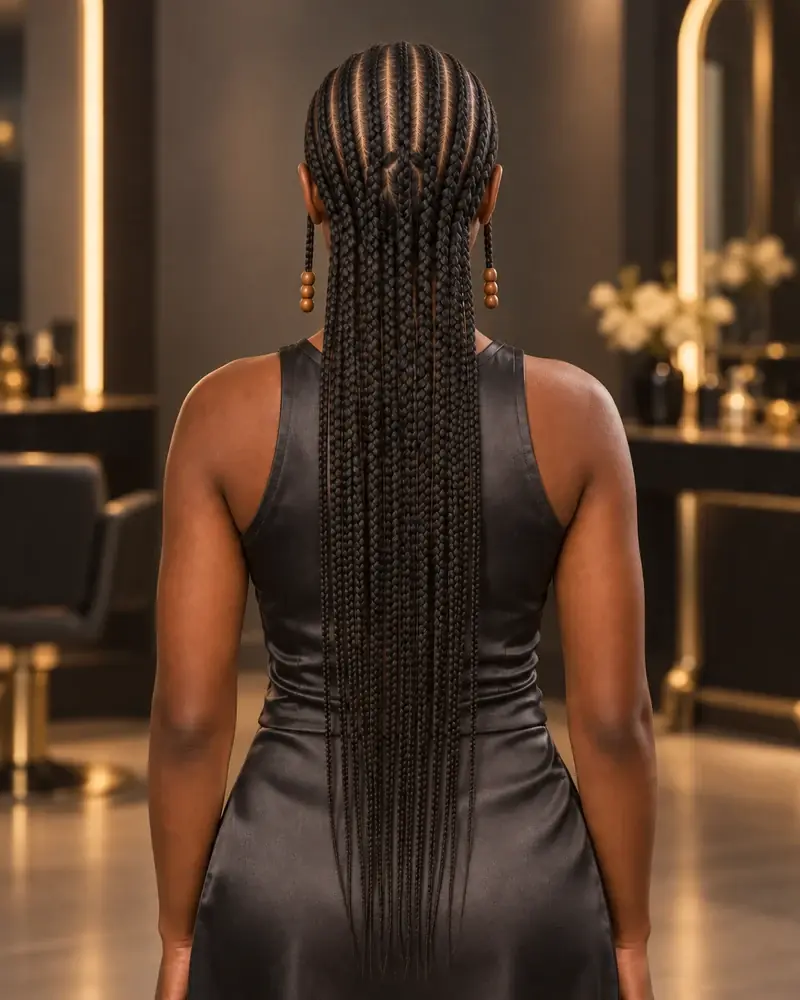
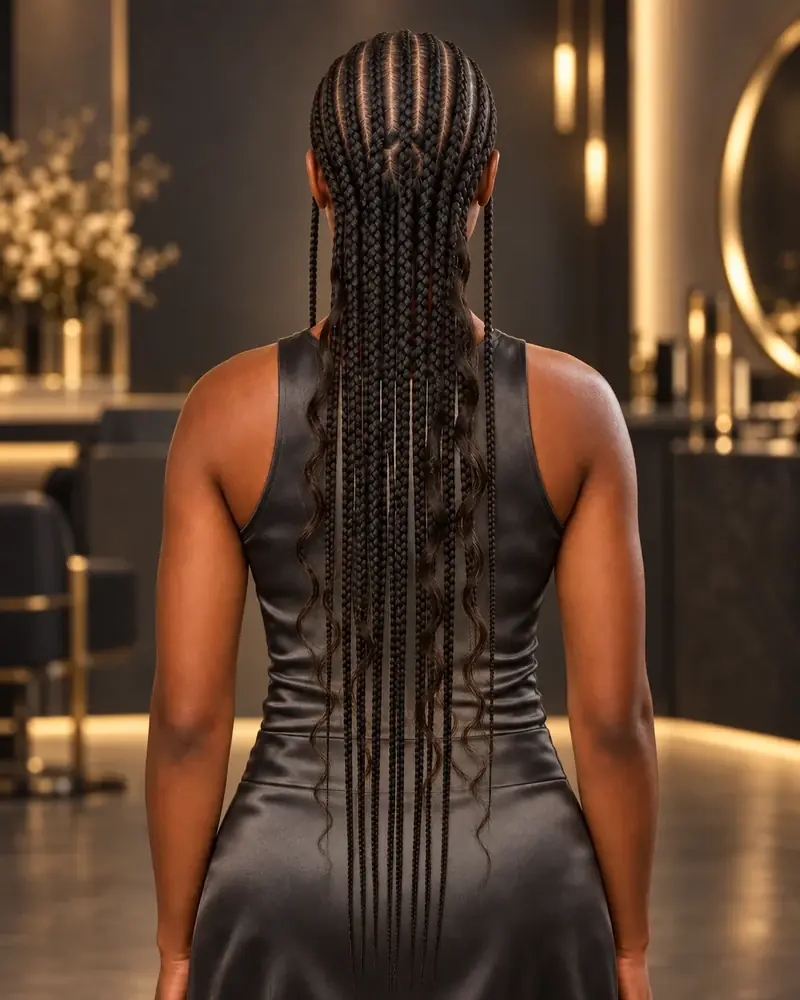
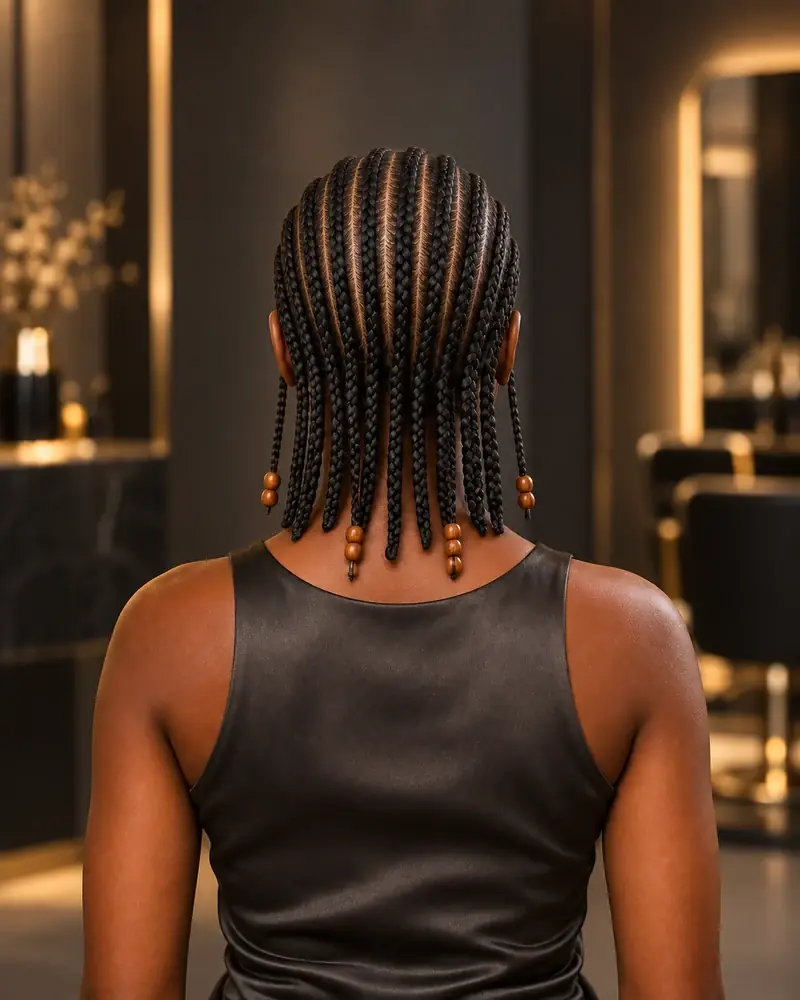
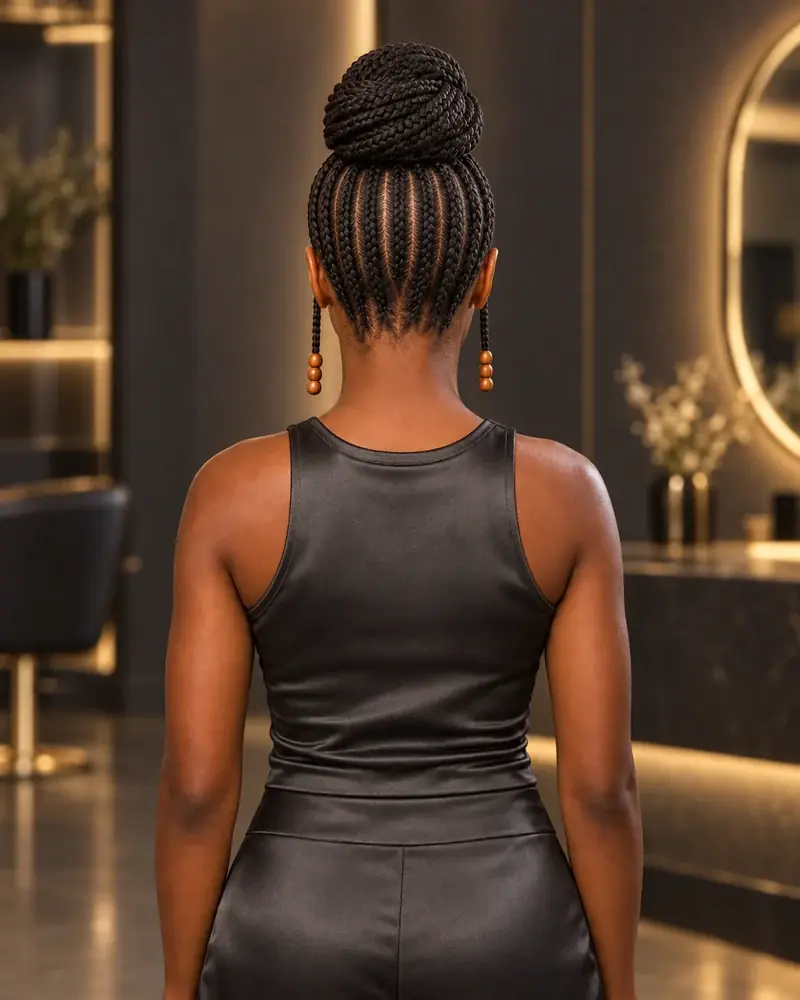
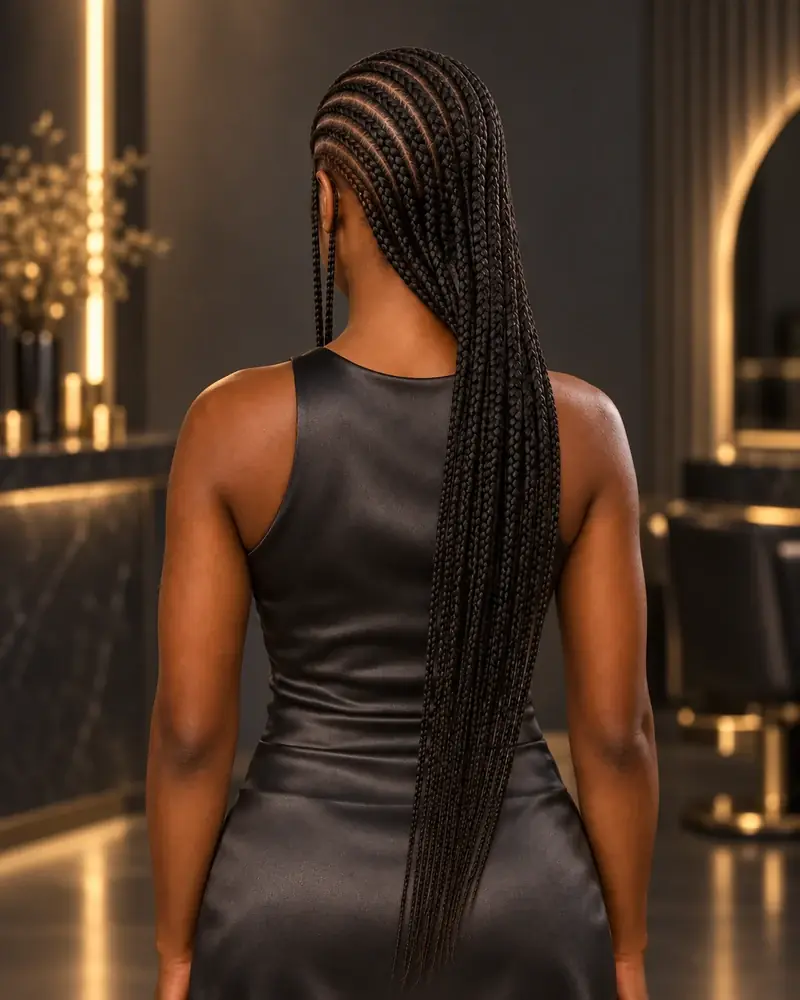
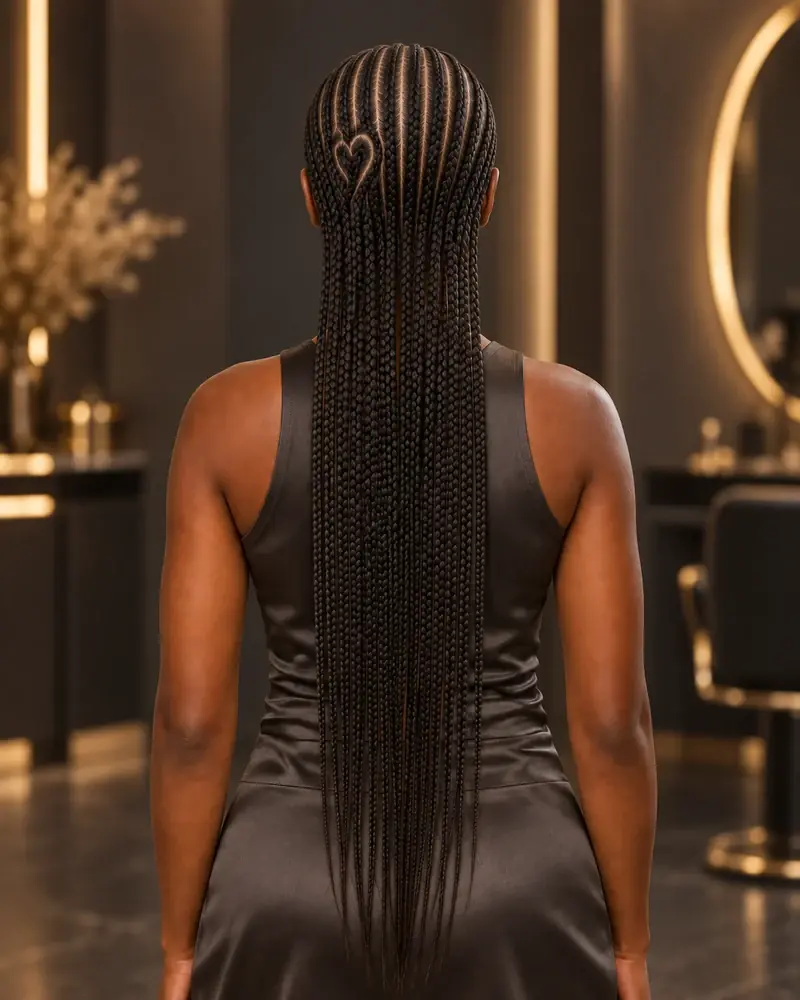
Fulani braids, as salons offer them today, combine cornrows at the front or top of the head with braids that hang loose, often individual braids at the back. The name refers to the Fulani (also called Fulɓe or Peul), a traditionally pastoralist people spread across the Sahel from the Atlantic to Lake Chad; this gallery shows modern versions, not a historical reconstruction.
Think in two zones. At the front or top there are cornrows, often with one down the centre and others heading to the sides or back; behind, the braids hang loose like box braids or knotless braids. If the whole style is rows lying flat down to the nape, it is closer to cornrows.
Thin braids by the temples or ears, finished with beads, are a very common detail, but not a requirement. The heart and the high bun are not part of a fixed formula either: here they appear as modern reinterpretations, with no traditional meaning attached.
And the “Side-swept Fulani braids” are not the same as Lemonade braids. Lemonade braids have a deep side part and every braid lies flat, curving towards one shoulder, with no individual braids at the back.
What to decide before your appointment
There are two techniques in one style, so you need to decide on both. For the back, choose between traditional braids and knotless; our comparison of knotless and box braids shows what changes at the start, in time and in price. For the front, decide how many rows you want and which way they run.
If you wear beads, think about their weight. The British Association of Dermatologists names them, together with long extensions, among the things that add significant weight and raise the risk of traction alopecia. A few light beads are the better choice, especially on the braids that fall by your face.
Look after your hairline too, because in this style the rows start right at the forehead and temples. Ask for the finest hairs at the edges to be left out, as the same association suggests. And if you want loose curls, as in the “Boho Fulani” design, add the care of those strands to all of this.
Care and wear time
For Fulani braids, our braid duration guide gives a salon estimate of four to six weeks. Check each zone separately: if the front rows are uncomfortable or tangled, there is no need to wait until the back looks worn.
Before bed, move aside or remove any beads that would sit under your head and cover the flat part with a soft scarf without dragging the hairline; how to sleep with braids has more options. The American Academy of Dermatology advises loosening braids especially around the hairline, which is exactly where this style concentrates its flat rows.
If you notice broken hairs along your forehead or a thinner hairline, take them out and see a dermatologist.
Sources: Fortes-Lima et al., “Population history and admixture of the Fulani people from the Sahel”, American Journal of Human Genetics, 2025, British Association of Dermatologists: caring for Afro-textured hair and American Academy of Dermatology: hairstyles that pull on hair.