
 English
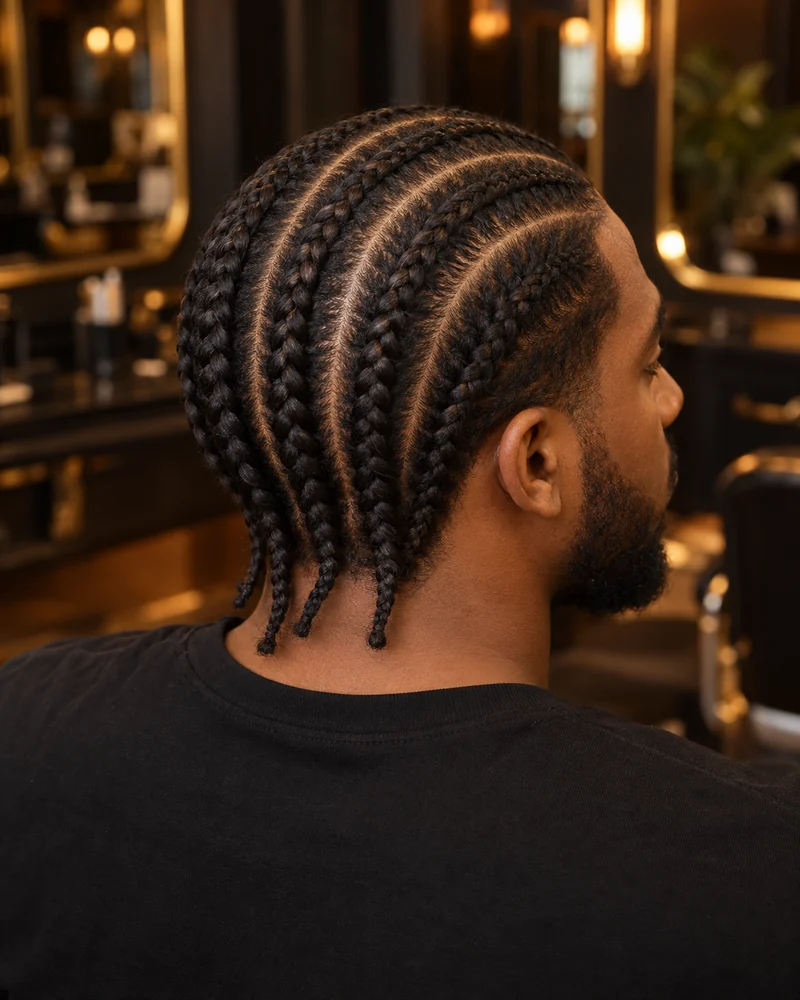
Straight-back cornrows
Rows braided close to the scalp, with clear partings between them. Their number and thickness change the pattern; choose a reference that also shows the nape.
Explore more designsFind your style
Close to the scalp, loose or paired with a fade? Compare six ideas, looking at the pattern, the sides and the length to find your style.
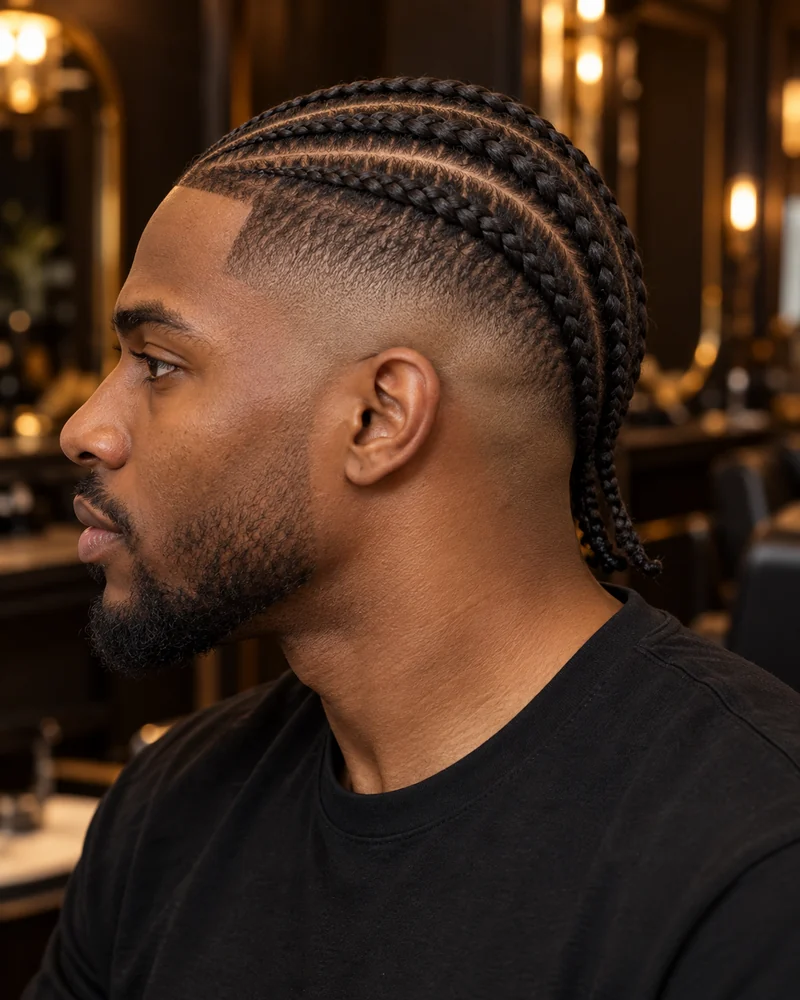
Choose a photo as your starting point. The final look is adapted to your hair and haircut.
Rows braided close to the scalp, with clear partings between them. Their number and thickness change the pattern; choose a reference that also shows the nape.
Explore more designs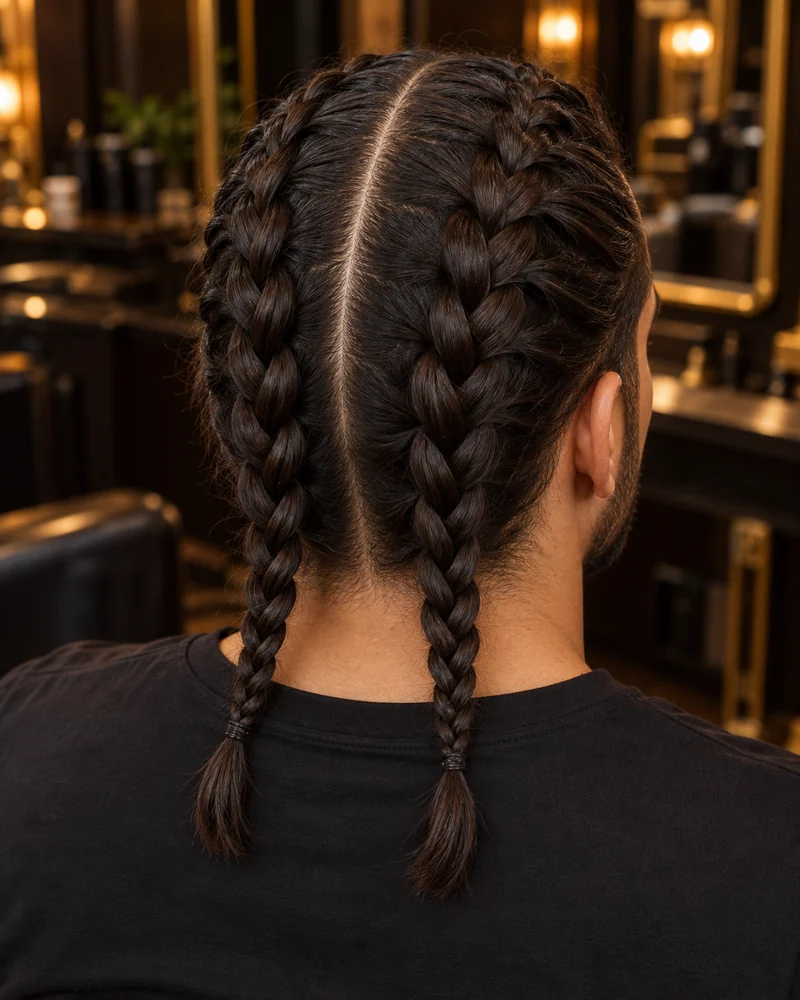
Two scalp braids can look very different depending on their path and parting. Compare a classic finish with an X-shaped crossover or a wavy part.
Explore more designs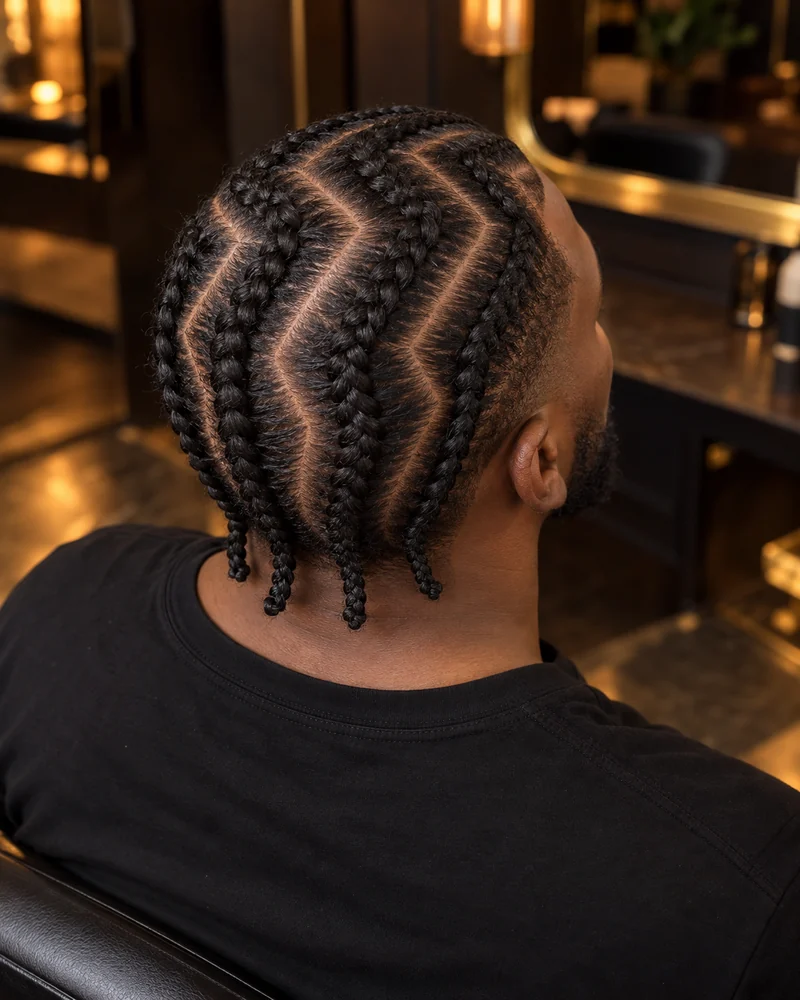
Partings change the pattern: angles between rows or a fan shape. A top view helps compare how the scalp-hugging braids run.
Explore more designsShort sides contrast with the braids on top. The fade is part of the haircut: agree on its height as well as the braid pattern.
Explore more designs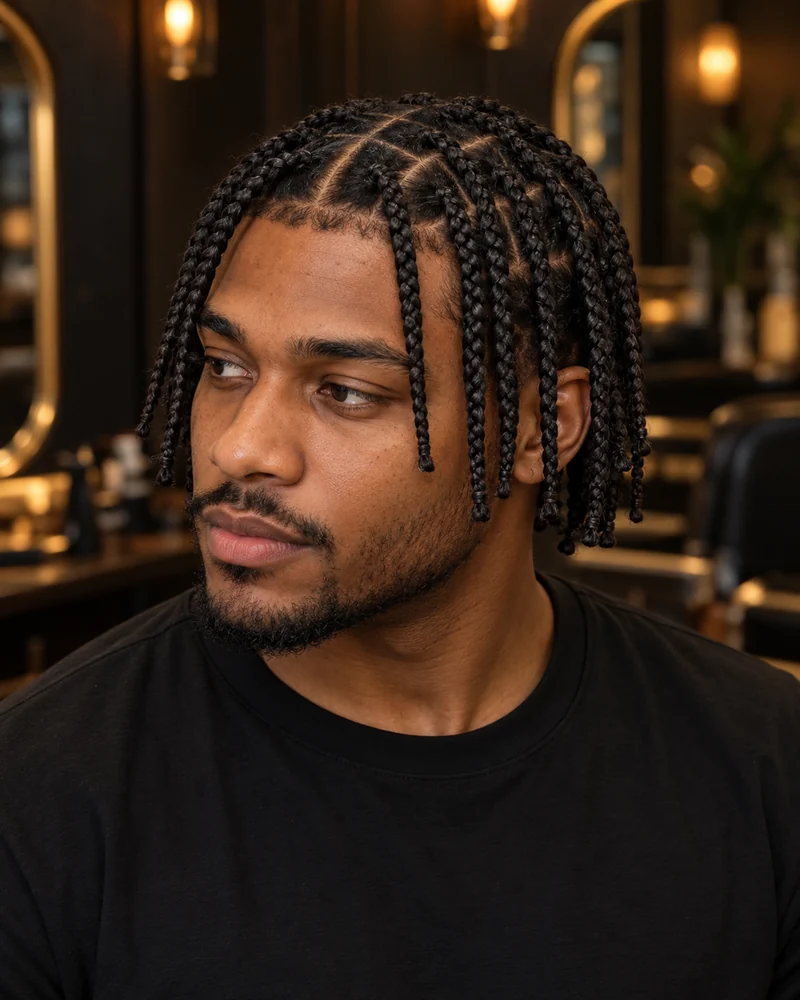
Individual braids hang freely instead of running along the scalp. Decide whether to keep your forehead clear or let a few fall towards your face.
Explore more designs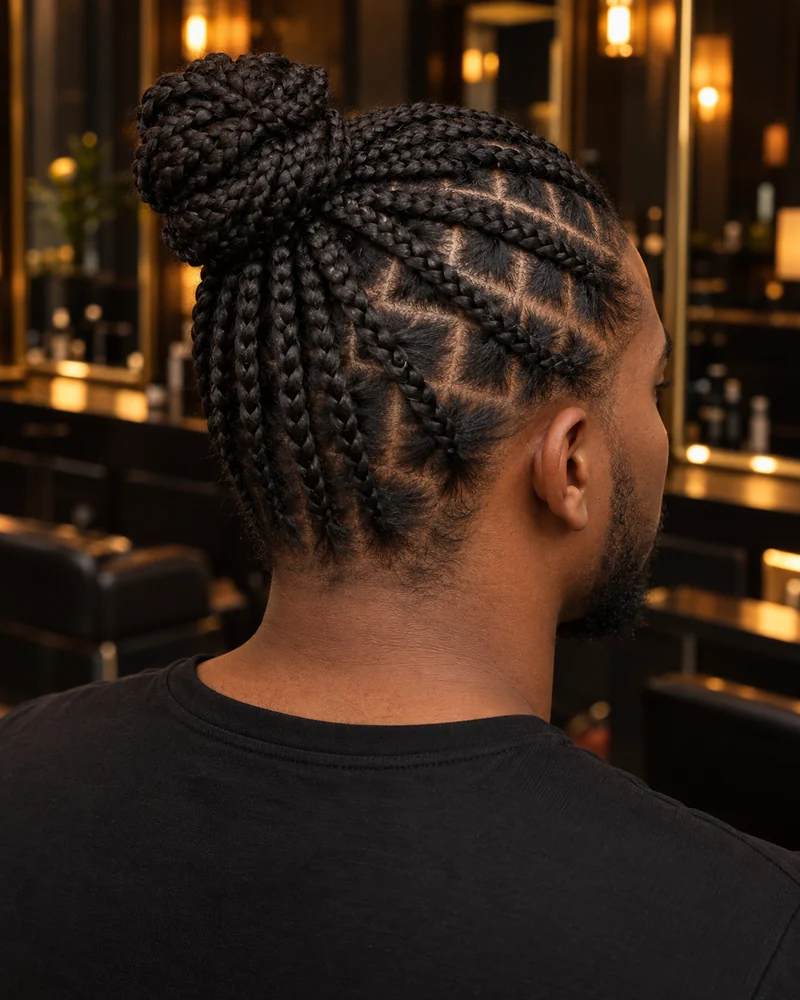
If you want to keep hair away from your face, look at where the bun sits and how much length it needs. Show how you would like the braids both up and down.
Explore more designsAlongside the braid pattern, agree on these three details.
A photo cannot tell you whether your hair can achieve that look. Show how you wear it now and ask what can be adapted without adding extensions.
Decide whether to keep the sides full, cut them short or add a fade. A side-view photo helps show where the braiding should end.
Ends at the nape, loose around the face or tied up: show the back as well. It makes a real difference to the finished look.
Compare techniques or find out how to care for the style you like.
← Back to the style guide